6.14
I've mentioned bone broth in previous posts, and have benefited from including stewed and slow-roasted meat dishes in my diet. A valuable sideline to the bone broth conversation is collagen. Collagen is an abundant, complex protein in our bodies, responsible for numerous restorative traits of our skin, joints and muscles, and as we age, we produce less and less collagen, and suffer the effects of that deficit.
 We get collagen from roasted or stewed meat, mainly making the animal proteins in our food available for our metabolism. We can also boost our bodies collagen production by eating fresh vegetables and fruits, nuts, garlic and onions. Gelatin is also a form of refined collagen, and yields many of the same benefits we gain from collagen in our diets.
Obviously, we can supplement with a collagen protein powder to make this valuable dietary asset available beyond mealtime. There are all kinds of collagen powders on the market, and innumerable collagen-enhanced foods (like snack foods and protein bars.) The point is to get an ample supply of naturally-occurring collagen in our daily diet.
Check out this article from Dr. Josh Axe to learn great details on collagen: What is Collagen
And here's a great article from Mark Sisson (author of Primal Blueprint) on 10 Reasons to Eat More Collagen
So work some collagen into your pantry and your diet. Our bodies are meant to benefit from this amino-acid-rich source of protein, especially as we age. Our bones, skin and joints will be glad we did.
By the Way
It's okay to eat the chicken skin from your chicken wings and legs - these are tremendous sources of collagen. Egg whites are as well. Consider stewing any and all kinds of bony meat cuts - things like ox tail, and shanks, and cuts of beef and chicken with the bones in. After a lengthy cooking time (think crock pot, not microwave) you'll have a great bone broth base for a few flavorful meals.
6.2
This past week I was honored to present a Power Pantry perspective to a group of business leaders in the Lancaster, PA, area. The task was simply to bring some valuable Power Pantry guidance that might help us all launch into a great 2019.
I prepared fundamentals on food, movement, wise counsel and goal setting. I figure those are life skills that I hope to use through my old age, so why not share them with this group of leaders. My Power Pantry foundation has always been that we need real food in our pantries, so my fist encouragement to the group was to "Get Real" in their food choices.
I also shared some direction from CrossFit and Spartan Race guidance. Interestingly, both of these wellness-related industries put a high value on our food choices.
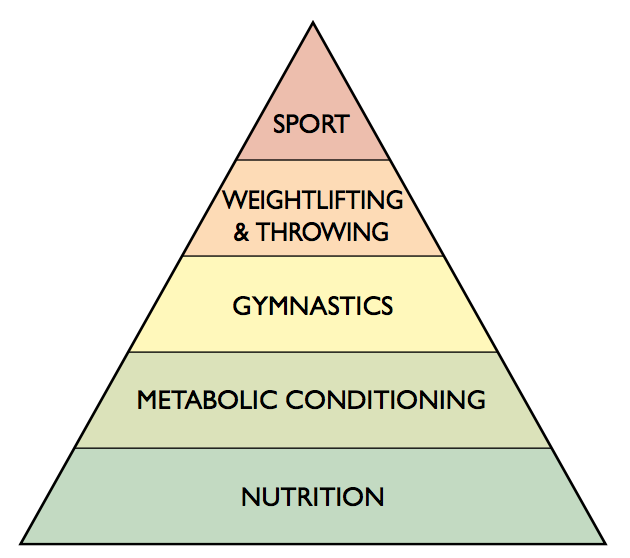 CrossFit has a training and certification series that gives the groundwork of their 'functional fitness' approach, and the base of that work is Nutrition. CrossFit direction on nutrition looks like this:
Eat meat and vegetables
Nuts and seeds
Some fruit
Little starch
No sugar
CrossFit has a training and certification series that gives the groundwork of their 'functional fitness' approach, and the base of that work is Nutrition. CrossFit direction on nutrition looks like this:
Eat meat and vegetables
Nuts and seeds
Some fruit
Little starch
No sugar
That's it. Fundamental, and real. No more faux food. Check out this great article that describes the CrossFit Level 1 training, and how some of these fundamentals fit together:
Off the Carbs, Off the Couch
Nutrition is the base of the CrossFit pyramid, and I agree. Real food is the foundation that allows us to overcome our Western lifestyle diseases, and have something to build on for true health and wellness. Start today by reading further on a whole food diet (past Power Pantry posts are a great resource), and purge some faux foods out of your pantry. You'll set the right tone for 2019 and give yourself a great wellness launch.
By the Way
Notice that CrossFit isn't against carbohydrates. There are plenty of carbohydrates in vegetables and fruits. The problem, metabolically, is refined starches (refined grains like wheat, and all the pastas, breads and snacks made from them.) A great diet includes plenty of lean protein, vegetables and fruits (and the carbohydrates that come with them), and naturally-derived fats. Let's work on getting more of those in our pantry and fridge.
5.16
If you've been reading Power Pantry for any amount of time, you know that all foods are not created equally. More than that, there are a lot foods which may be nutritious and satisfying for some people, and downright harmful to others.
I have a very sensitive gut, and have learned over the years that some foods are just fine for me, yet others (think nightshade veggies, corn and legumes) are flirting with nutritional and physical disaster. This keeps me watching for healthful sources of carbs, fats and protein, and yields (hopefully beneficial) content for Power Pantry.

One healthful protein I appreciate is the sunflower seed. I've mentioned sunflower seeds numerous times in Power Pantry, but know these nutritional powerhouses deserve a closer look. While so many proteins come with dietary or digestive challenges (dairy, beans, tree nuts, various fish, eggs, etc.) sunflower seeds offer numerous nutritional benefits with none of the common allergy issues.
These power-packed seeds have been cultivated and enjoyed for thousands of years, and one thing consistently credited to sunflower seeds is that they are well tolerated by so many people. Along with that, sunflower seeds pack tremendous health benefits. Check out this article from the website for "The World's Healthiest Foods" (www.whfoods.com)
Sunflower Seeds - a health-promoting snack
Note the variety of benefits: a great source of Vitamin E (the body's only fat-soluble anti-oxidant, for anti-inflammatory help and cancer prevention ); phytosterols to lower cholesterol, magnesium to strengthen our nervous system, and selenium, a powerful detoxifier and cancer preventer.
So if you're looking for something super healthful, snackable and satisfying, reach for sunflower seeds. You just may find a new favorite.
By the Way
If you like nut butters as much as I do, you'll appreciate this further perspective from Dr. Axe on sunflower seed butter: Sunflower Seed Butter - the Peanut Butter Alternative
2.5
There's a difference between a fad and a trend... a fad comes along quickly and fades away just as quickly, whereas a trend develops and matures more slowly, and likely becomes part of the fabric of life. I've been seeing a change on the horizon, and asked myself whether this is a fad or a trend...my gut tells me it's a trend...
%5B2%5D.jpg) The innovation I've been seeing (which isn't an innovation at all... folks have been doing this for millennia now) is consuming insects as a regular part of their diet, especially as a source of sustainable protein. Recently I saw an article in Prevention Magazine, "Are Crickets the Future of Food?" which led me to Megan Miller, cofounder of Bitty Foods. Megan did a mind-stretching TEDx Talk last year that tells her story:
The innovation I've been seeing (which isn't an innovation at all... folks have been doing this for millennia now) is consuming insects as a regular part of their diet, especially as a source of sustainable protein. Recently I saw an article in Prevention Magazine, "Are Crickets the Future of Food?" which led me to Megan Miller, cofounder of Bitty Foods. Megan did a mind-stretching TEDx Talk last year that tells her story:
Megan Miller: Are Insects the Future of Food - click through and check this out... it's only about five minutes.
Here's further evidence that an insect-as-food trend is developing. This article is from almost four years ago in the Wall Street Journal:
The Six-Legged Meat of the Future
The point behind this growing trend is that insects are very simple to raise, and they are exceptionally sustainable. The bloated (and, I think, unnecessary) beef and dairy industries, not so much... With population projections of an additional two billion people joining our planet in the next 35 years, and first-world populations continuing to grow, it would be great to have some sustainable and nutritious options for eating.
I'm not in any way ready to add crickets and bees to our power pantry, but learning about this growing trend and the potential of a sustainable food source has me thinking. I'd give it no more than about 3 years, and I bet we'll all have tried something with cricket flour or topped with a meal worm or two...
By the Way
I'd say not to be too grossed out by the whole insect-as-food topic. After all, shrimp and prawn are nothing but sea bugs, really. And lobster are just the over-sized cousins of those bugs, so if you love these crustaceans, you're half way there.
2.3
I've posted in the past about the ill effects of the standard American diet, and specifics like consuming way too much protein. Coming off of some less-than-stellar eating over the holidays, we could probably all use a refresher on another attribute of our common diet: we eat way too little fiber. And I'm not talking about prune juice and raisin bran... (come on, I'm not even 50...) The fact is, the carbs and protein that are staples for our meals leave us significantly lacking when it comes to dietary fiber.
So why does fiber matter? Because it is the catalyst for keeping our digestive tract performing well, and it makes nutrients accessible by moving food through our system. When we don't have enough fiber, frustrating and painful gut issues crop up like diverticulitis and constipation. I've had friends and relatives who suffered from diverticulitis attacks in the past, and it is really painful and disruptive to life, but it is also really simple to overcome. At the core of the solution is a diet rich in whole foods, lots of veggies and fruits, and staying well-hydrated. There are plenty of other benefits of fiber in our diets, like lowering our risks of diabetes and heart disease, and helping to maintain a healthy weight.
Here is some basic information explaining dietary fiber, and how to get enough fiber in our diets, from the Mayo Clinic:
Dietary Fiber: Essential for a healthy diet
 If you're going to add some fiber-rich eating to your power pantry choices, start slowly. You want to build up to about 35 grams of fiber a day, which may be a lot depending on how you currently do eating your fruits and veggies. If you amp up too quickly, you may suffer through a lot of bloating and discomfort, so take your time. The point is to make it a health habit, just like anything else in a wellness lifestyle. Get used to the idea, wade in, and don't look back. You'll benefit in no time, especially if you've suffered from gut issues in the past.
By the Way
The key sources of dietary fiber are fruits, veggies, beans / legumes, and seeds. Adding some compliment of these to every meal is the key. For me, I enjoy a morning muesli for breakfast most days of the week, which features things like oats, millet, ground flax seed, chia seeds, dried fruit, almonds, walnuts and frozen berries. There are a myriad of ways I can mix and match all of these nutrient-dense, healthful ingredients for a tasty, fiber-rich breakfast any day. It's a great start...
1.74
Hopefully you had a great Thanksgiving, as I did with my wife and family. We are grateful to have shared a delicious butterball turkey with all the trimmings (although our sweet potatoes didn't have the little marshmallows on top...) And I have to say we did fairly good in the nutrient density department, respecting our power pantry choices. We made some great substitutions (like a gluten free stuffing along with regular stuffing) and subtractions (our green beans were sans cream of mushroom soup and fried onions...although they had some crumbled bacon...) The big question is whether our holiday food choices are worthwhile when it comes to nutrient density, that is, how much nutrition is packed in each calorie we choose to eat.

I've posted about nutrient density before. It's a concept popularized by Dr. Joel Fuhrman, one of my favorite nutrition-focused writers and thought leaders. Dr. Fuhrman's formula for health is H = N/C, where H stands for health, N stands for nutrients, and C stands for calories. So our health can be determined by how many nutrients are packed into the calories we consume, our nutrition per calorie. Overall, he refers to this N/C concept as nutrient density.
I had a good nutrient-density conversation with a business friend last week, concerning his health journey and his growing awareness of healthy eating. He is benefiting from nutritional adjustments to help him overcome years of back pain. The great thing is that it's working! Being conscious of the nutrients in the food we choose to eat can make all the difference in the world.
You can review that previous post on nutrient density for some other food-choice ideas, but the point for our holiday food choices is to focus on whole foods over processed foods, and to overwhelm our diet with calories from high-nutrition sources. Yes, there may be holiday cookies and pies, and those little sausages every now and then, but by making some power pantry choices of a big salad, some steamed veggies and brown rice, and desserts focused on berries, fresh fruits and pomegranates, we can lean into high-nutrient choices. The result will be a deep-breath kind of confidence come January, and while we'll have really enjoyed the holidays, we won't be sorry at all for our food choices. Here's to some wonderful Christmas preparations and enjoyment of the season!
By the Way
What we're really after, nutritionally, with our whole food choices are phytochemicals, or phytonutrients. These are the naturally occurring healthful constituents of unrefined plant foods, and it is the basis of nutrient density. For instance, a 100 calorie portion of broccoli has almost twice the protein of a 100 calorie portion of steak. And kale and romaine pack way more nutritional punch per calorie than animal-based foods, grains or even beans and seeds. So stock up on your fresh veggies this holiday season!
1.47
Some tremendous whole foods are small, unassuming, and right under our noses. I think that's the case with seeds. Most of them don't get a lot of play in popular culture, and cooking with seeds just isn't widely accepted or practiced. But seeds hold all kinds of promise for adding some healthy nutrition to our menus and snacks.
Let's look at a few great seeds:

- Sunflower - great source of vitamin E and magnesium, folate and zinc, as well as fiber and antioxidants
- Sesame - high in manganese and copper; also iron, magnesium, calcium, vitamin B1, and a great source of fiber; also high in linoleic acid, and omega-6 fatty acid; ground sesame seeds (tahini) also makes a good spread and addition to hummus
- Pumpkin - (pepita) rich in protein and vitamin B-complex (thiamin, riboflavin, niacin, pantothentic acid, vitamin B-6 and folates), and a good source of selenium
- Flax - great source of dietary fiber, Alpha-Linolenic Acid (ALA), and lignans
- Chia - (the ancient Aztec warrior seed) one of the top 10 superfoods, chia is a tremendous source of protein, calcium, iron, omega-3 fatty acids, fiber, magnesium, vitamin C and more. Chia also has a unique quality that it yields a gel-like consistency when added to water, so it can be good as a thickener or for improvised jams and puddings
What's great about seeds is that they can be added to numerous dishes to add texture, flavor, and obviously a boost of nutrition, and cooking with seeds is simple. I like adding seeds to my morning muesli (a hearty start to the day), or they can be included in salads, as a topping on vegetable side dishes, or as a nutritious addition to snacks.
A key to getting all the nutritional benefit from seeds is to eat them raw. Toasting and roasting of seeds depletes and even removes many of their mineral and antioxidant qualities. Added seasonings (salt especially) can also give seeds a bad rap nutritionally (the seeds are great, but when combined with poor seasoning choices, they become a not-so-healthy addition to our menu.) So give seeds a try - find a new recipe or just improvise by adding some beneficial seeds to a favorite dish or two. You'll be glad you did.
By the Way
There are still other interesting seeds you can research and use in recipes, like hemp, pomegranate, and grape seeds. All these have particular protein, fiber and mineral benefits, and can be valuable in cooking. What's fun is to experiment with new recipes and try out the unique tastes and textures added by seeds. Happy cooking!
1.44
As a nation, we eat way too much protein, especially animal protein. I know I've already lost some of you with that simple statement because it sounds extreme, like henny penny looking for the sky to fall (raining with bacon and fried eggs, in this case). We've been sold this strange bill of goods that beef and chicken and dairy and eggs are great for our health, born mostly out of our farming history and successful industry lobbying of the past century. As Washington's regulations go, so goes our nation... and our health is going right down the sewer (kind of like Washington?)
Some folks have even been convinced that vegetable proteins are incomplete, and we'll be lacking vital amino acids if consume a plant-based diet and skip the meat, dairy and eggs. That's factually incorrect. Our bodies can do just fine on plants alone, and counting all the health issues that result from eating animal-based foods, we'd do much better to side with the vegetables.
I've often conveyed that I'm a fan of Dr. Joel Fuhrman and his book "Eat to Live". Consider this passage about the protein myth from page 140:
A healthy diet, we were taught, supposedly centered on meat and milk. Protein was thought to be the most favorable of all nutrients, and lots of protein was thought to be the key to strength, health, and vigor. Unfortunately, cancer rates soared. As a result of scientific investigations into the causes of the disease, we have had to rethink what we were taught. Old habits die hard: most Americans still cling to what they were taught as children. There are very few subjects that are more distorted in modern culture than that of protein.Keep in mind that we do need protein. We can't be healthy without protein in our diet. Plant foods have plenty of protein...and you don't need to mix and match foods to achieve protein completeness. Any combination of natural foods will supply you with adequate protein, including all eight essential amino acids as well as nonessential amino acids.
Yes, old habits die hard, but they do eventually die. Unfortunately, it is taking generations of sickness and disease (heart disease, diabetes, and cancers, especially) to get the attention of our nation. We have terrible eating and wellness habits in our western culture, and thankfully the solution is really simple: lean hard toward a plant-based diet.
 Here are a couple did-you-know facts. From a nutrient density standpoint (ie, how much nutritional bang do we get for the calorie buck, from the foods we eat) green veggies beat everything else - hands down. When looking at the protein content per calorie, green vegetables register about 50% of their calories from protein content, and vegetables in general supply about 10% of their calories from protein. That's good nutrient density, and a great protein source.
There is more and more evidence entering the mainstream about the inflammation caused by animal-based foods, and how that results in plaque in our arteries, obesity, diabetes, many common cancers and numerous other health issues. More on these in a future post. Suffice it to say that focusing on a plant-based diet, and following Dr. Fuhrman's 'GBOMBS' protocol (see post here) will get you exceptional nutrition, plenty of protein, all the amino acids you need, help you shed pounds and feel incredible.
By the Way

Check out "Plant Power" advocate, Rich Roll, and his great information on successfully living a vegan lifestyle. Rich is especially unique because he is an ultra-endurance athlete. Rich has a great website where you can catch some of his content he's shared with CNN and Men's Health magazine, as well as his #1 book on Amazon - www.richroll.com

