6.24
 Years ago I was a coff-alholic - I consumed significant quantities of coffee daily, with little regard for how much I was actually drinking. Then at some point, maybe about 15 years ago, I realized that the rush of caffeine was less energizing and more stressful than what I wanted to live with. I bailed out and felt much better over time. One problem is that I really enjoy a good, hot mug of fresh, black coffee.
Since adjusting my coffee consumption, I've ebbed and flowed between decaf (it can really be a poor stand-in for regular coffee) and no coffee at all. Recently, I've found a better middle ground of a cup or two a day, several days a week. Not nearly the highs and lows of caffeine I experienced years ago.
So is coffee good for you or bad for you? The answer is really a bit of both. Much depends on how it is prepared (high-quality water and fresh ground, appropriately roasted beans) and how much we consume. There are great anti-oxidants in fresh brewed coffee, and numerous, everyday health benefits.
Check out this article from Dr. Josh Axe on the top 8 Health Benefits of Coffee. Coffee is great for heart health, liver health, and controlling things like asthma and Type 2 diabetes. Beyond those, coffee increases energy and mental concentration, fights depression and improves athletic performance.
The key to benefiting from coffee consumption, like so many things, is moderation. Thankfully, I've landed at that place of moderation myself, after all these years, and I think I'm at a sustainable place. If you're a coff-aholic, like I was years ago, consider cutting back to a few cups of coffee a day. If you're not a coffee drinker, no need to start, but maybe you'll develop a taste for the aromatic, tasty brew that has revved up societies for centuries.
By the Way
Be aware of numerous coffee look-alikes, that aren't the real thing. A lot of high-volume coffee vending comes from reconstituted coffee concentrate that may contain stabilizers, preservatives and 'natural flavors' to extend shelf life and yield a good-tasting end product. It's not the real thing, even if they've mimicked good tasting coffee.
5.04
A healthy gut goes hand-in-hand with a healthy body and wellness lifestyle, and one of the healthiest forms of food we can consume are fermented / cultured ones. I have eaten yogurt on and off my whole life, and like many Pennsylvanians, enjoy pork and sauerkraut at New Year's day every year. These common menu items reflect the benefits found in numerous fermented foods.
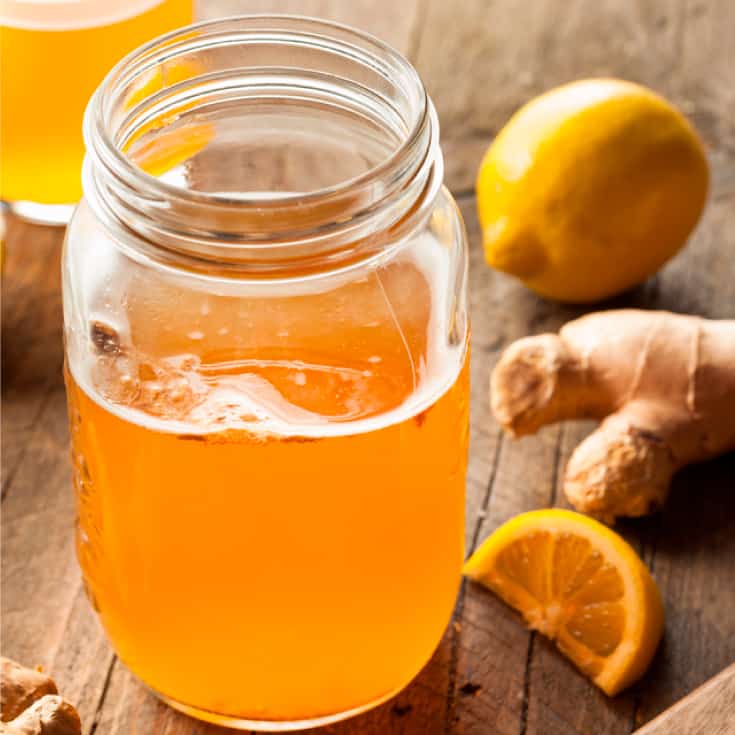 A fermented all-star, which is gaining significant attention in recent years, is kombucha. This fermented tea develops a light carbonation and a slight acidic bite, along with a sophisticated flavor profile. And the benefits to our health are numerous.
Kombucha (pronounced kawm-boo-chah) is an ancient beverage, known for its significant health benefits, and enjoyed in eastern Asia for over 2000 years. It is commonly made from black or green tea, a bit of plain sugar, and an active starter culture, referred to as a SCOBY (symbiotic colony of bacteria and yeast).
It is this colony of (healthy) bacteria and yeast which give kombucha its health-power. There are numerous gut-friendly probiotics in kombucha, as well as healthful levels of acetic and lactic acid. Kombucha has proven helpful with boosting immunity, improving gut health, being high in antioxidants and B vitamins, and supporting heart health.
Check out this great overview of kombucha from a Lititz, PA-based brewer, Renewal Kombucha:
Renewal Kombucha FAQ
And for some further reading, see this article from Dr. Josh Axe on the many benefits of kombucha:
Dr. Axe - Reasons to drink Kombucha
By the Way
There are plenty of bottled kombucha options at many grocery stores. Look for unpasteurized varieties, as pasteurizing would defeat the the beneficial bacteria culture.
Store-bought kombucha can be pricey ($3-$4 a bottle) so you could consider brewing your own at home. It's kind of like hard cider, and very simple to make if you are patient and careful with your ingredients.
3.29
I posted last week about questioning everything. That's a good way to stay mentally fresh and growing through life. And part of the journey of questioning everything is keeping an open mind to what we observe and experience along the way.
Some time ago I was at dinner with a few business friends and one specifically got a mug of hot water with our dinner (while the rest of us were having seltzers and sodas and adult beverages.) One of the guys questioned him on his dinner beverage, and he simply said that it's a lot healthier for your than cold water, and certainly better than sodas and beer. I think that was the first time I was aware of someone specifically drinking hot water with a meal, or anytime, because of the health benefits.
Fast forward to a current coworker, who with lunch everyday has hot water (with a squeeze of lemon). Hmmm... this piqued my interest enough to merit some further study. After reading a half a dozen or so articles and posts on the benefits of drinking hot water over cold, I too am set on the benefits of a few glasses of what I'll call, 'unflavored tea.'
I acknowledge how refreshing a glass of fresh cold water is on a hot day. I especially like cold water, but not iced water (something close to 50 degrees, which is about the temperature of fresh natural spring water.) But the muscle tension, constricted blood vessels and hindered digestion which result are all good reasons to steer clear of cold water as a beverage of choice.
 Hot water to the rescue. The numerous benefits of drinking hot water over cold are varied and proven. From better digestion to healthier skin to improved blood circulation, reduced nasal congestion, general body detox and relief of cramps, hot water is the winner, hands down.
How much water should we consume in a day? Research and doctors suggest between a half an ounce and one ounce per pound of body weight. That's several quarts of water a day... and that's over and above coffee and other drinks. We all better get drinking if we want to keep up with that pace.
Give it a try. Maybe it sounds a bit flaky, but do a two week test of drinking hot water as your beverage of choice and see if you don't detox and feel better.
By the Way
Check out this post from LifeHack.org for 12 Unexpected Benefits of Drinking Hot Water. Then sit down with a big mug of unflavored tea, relax, and enjoy!
2.4
I got the coolest health-nut gift for Christmas... a NutriBulletPRO 900 (by Magic Bullet). OohRah! This is the ultimate blending machine, where nutrition is concerned.
When it comes to getting the most of the whole fruits and vegetables we eat, there are two schools of thought for making it into juice. Overall, it is agreed that breaking down the cell structure of the food extracts and releases more of the nutrients (like antioxidants, vitamins and minerals) making these absorb-able and nutritionally available. The difference is in whether you 'juice' or 'blend'. When you juice, you extract almost all of nutrient-rich juice and leave the pulp behind (the skins, fiber, seed hulls, etc.) If you blend, you completely pulverize the whole food, breaking down the juice, fiber, skins, seeds, etc., into a slushy, whole-food drink of whatever you're blending. I'm definitely a blender, not a juicer.
The concept for blending whole fruits and veggies is simple: fill the NutriBullet cup half way with greens (spinach, collard greens, kale, romaine, etc.) top off with any kind of fruit (could be frozen, to lend a cold, slushy consistency to your drink), add filtered water and blend for about 15-30 seconds. That's all it takes.
For an extra boost, you can add things like chia or flax seeds, almonds, walnuts, maca powder (more on that in a future post) and cacao powder. Any of these will give your drink a nutritional blast of vitamins, antioxidants, healthy fats and more.
At this point we've made numerous morning drinks in the NutriBullet, as well as a great dairy-free chocolate pudding, a rich, spicy chocolate / chia pudding, and an interesting take on vanilla pudding (using chia seeds). It makes an incredible banana 'ice cream' (just blend frozen bananas, scoop and eat - awesome... especially when topped with the chocolate pudding...)
So if you want to get more from your whole fruits and veggies, and get your daily supply of greens in a convenient way, consider blending (or juicing) to give your health a great boost.
By the Way
One of the best things about the NutriBullet is how easy it is to clean up. Because the blender 'pitcher' is actually the drink cup, you just turn the cup upside down to blend (the blades are mounted in a sealable lid) and once blended, turn right-side-up and enjoy. Very cool.
There are other great drink blender options as well, like the NutriNinja... but I'm psyched about my NutriBullet...
 1.30
I have always enjoyed a nice hot beverage in a big mug. In the 1990's I was a coff-aholic (I drank way too much coffee). Some days I would top 2 quarts a day, and being in my 20's, that seemed like no big deal. Since then I've gone caffeine-free for months and years at a time, and settled into being pretty much of a tea snob. I'll indulge in a great cup of coffee a couple of times a year. Beyond that, I enjoy a good cup of green tea, herbal mint or chamomile, and sometimes a black tea or blend. I can get plenty of caffeine, if that's what I think I want, and I keep my hot-drink habit.
1.30
I have always enjoyed a nice hot beverage in a big mug. In the 1990's I was a coff-aholic (I drank way too much coffee). Some days I would top 2 quarts a day, and being in my 20's, that seemed like no big deal. Since then I've gone caffeine-free for months and years at a time, and settled into being pretty much of a tea snob. I'll indulge in a great cup of coffee a couple of times a year. Beyond that, I enjoy a good cup of green tea, herbal mint or chamomile, and sometimes a black tea or blend. I can get plenty of caffeine, if that's what I think I want, and I keep my hot-drink habit.
Much of our wellness is based on throughput - taking nutrients in and getting rid of whatever is left over that our bodies don't need, or are of marginal value. The key to that throughput is water. Call it hydration or detoxification, water is a key to physical health and wellness. Believe me, 20 years ago, I didn't have a 'water habit', but I do now. I realized, in the midst of my hot-drink habit, I need to also keep up with that necessary hydrating throughput.
 To define 'good' water, it would be filtered (tap) water. We use a Pur activated carbon filter at home. A reverse osmosis unit is great, but they are expensive and use a ton of process water for regular back washing and maintenance. Bottled water is marginal - the bottles are wasteful and numerous studies show that the plastics in the bottles can be bad for our health. So filtered tap water (the pitcher filters are great as well - you can keep them in the fridge for cold water anytime) is a great resource.
Another thought on daily beverages: I don't drink flavored sodas anymore. I can't remember the last time I had a Coke or Mountain Dew. What I've replaced those with is seltzer. That is now my drink of choice whenever I'm out for a business meal or dinner with our family. Many fast food soda dispensers now offer seltzer as one of the 'water' tabs next to the iced tea or Sprite. Put in a slice of lemon or lime, and it is refreshing and not at all bad for you. We keep 2 liter bottles on hand around the house and our kids love to experiment with fruit juice additions - cranberry, orange, grape, etc. We keep 100% fruit juices on hand, and while those aren't the most nutritious choice (you still get a huge glucose spike from fruit juices) it's much better than any soda or processed juice options.
Suggested things to stay away from in drinks: sugars of any kind (high fructose corn syrup, corn syrup, sugar, etc.) artificial sweeteners (aspartame, sorbitol, sucralose, etc - these are detrimental to our health) artificial colors and flavors. If we stick with natural juices (grape, cranberry, apple, orange) those are a good treat. "Vitamin" waters are okay as well; these are often fortified with natural nutrients and vitamins and natural sweeteners like xylitol and stevia.
With summer here and all the chances for sweating at the amusement park and the beach, or if you're just around the office or traveling, think about working on your water habit. Staying hydrated is a fundamental key to wellness, and goes great in with your power pantry.
By the Way
 I've learned that there are some simple parameters to staying hydrated. A key rule of thumb is to drink half your weight in ounces of water, every day. For example, my weight is in the 150's, so I should be drinking 75 ounces of water every day. That would be at least 10 - 8 ounce glasses of water. I usually drink from a large glass or water bottle (closer to 16 ounces) so that would be about 5 of those a day. One in the morning, one at lunch and one in the evening, and a couple thrown in during the day and I'm well on my way to that goal.
If you work out, run or do a lot of physical activity (yard work, etc.) then you should add to that base line, like an extra quart or more per day. And caffeinated drinks and alcohol don't count toward your water habit... sorry...
 Years ago I was a coff-alholic - I consumed significant quantities of coffee daily, with little regard for how much I was actually drinking. Then at some point, maybe about 15 years ago, I realized that the rush of caffeine was less energizing and more stressful than what I wanted to live with. I bailed out and felt much better over time. One problem is that I really enjoy a good, hot mug of fresh, black coffee.

