Showing posts with label plant-based. Show all posts

Sunday, September 9, 2018

Pantry Purge

5.17

Michael Pollan has a great quote that I've shared before in Power Pantry:
"Eat food, not too much, mostly plants."

In the US (and other cultures which are unfortunately following our standard American diet) we are over fed, and under-nourished. Following Pollan's guidance is a tremendous start to correcting that.

Check out this review of Pollan's 7 Rules for Eating, posted on WebMD:

7 Rules for Eating
Image result for real food

Note that food refers to 'REAL food' - not the lab-designed food-like substances sold from the shelves of convenience stores and groceries nationwide. Coke products are NOT food... potato chips are not food... even breakfast cereals, frankly, fall far short of being food.

One perspective I appreciate from Pollan is that if your grandmother wouldn't recognize it as food, don't eat it. Wow would that eliminate a lot from our pantries.

How is your pantry looking? Have you done a comprehensive review lately? Feeling a bit run down and achy? Start with what you're putting into your body... follow Pollan's 7 Rules faithfully. Seek out REAL food. Then whatever you find in your pantry which has any flavoring (natural or artificial), coloring, preservatives of any kind, or any kind of sweeteners which are overly processed (dates=good; sorbitol, aspartame and even erythritol=bad) throw out.

The result? You'll have the opportunity to drop weight, sleep better, enjoy your calories, and even knit better as a family. The biggest benefit of all is that our bodies will thank us when we purge the faux foods and commit to buying and eating real food. Happy shopping!


By the Way


Become an expert at reading labels. Look for a minimal number of ingredients (think Lara Bars, not Nutrigrain bars...). Get the family involved and cooking together, then sit and savor today's culinary creations. Truly learn to appreciate and savor the smells and tastes and textures of what you eat, and you'll be on your way to wellness.




Sunday, September 2, 2018

Nutritional, Power-packed Seeds

5.16

If you've been reading Power Pantry for any amount of time, you know that all foods are not created equally. More than that, there are a lot foods which may be nutritious and satisfying for some people, and downright harmful to others.

I have a very sensitive gut, and have learned over the years that some foods are just fine for me, yet others (think nightshade veggies, corn and legumes) are flirting with nutritional and physical disaster. This keeps me watching for healthful sources of carbs, fats and protein, and yields (hopefully beneficial) content for Power Pantry.
Image result for sunflower seeds
One healthful protein I appreciate is the sunflower seed. I've mentioned sunflower seeds numerous times in Power Pantry, but know these nutritional powerhouses deserve a closer look. While so many proteins come with dietary or digestive challenges (dairy, beans, tree nuts, various fish, eggs, etc.) sunflower seeds offer numerous nutritional benefits with none of the common allergy issues.

These power-packed seeds have been cultivated and enjoyed for thousands of years, and one thing consistently credited to sunflower seeds is that they are well tolerated by so many people. Along with that, sunflower seeds pack tremendous health benefits. Check out this article from the website for "The World's Healthiest Foods" (www.whfoods.com)
Sunflower Seeds - a health-promoting snack

Note the variety of benefits: a great source of Vitamin E (the body's only fat-soluble anti-oxidant, for anti-inflammatory help and cancer prevention ); phytosterols to lower cholesterol, magnesium to strengthen our nervous system, and selenium, a powerful detoxifier and cancer preventer.

So if you're looking for something super healthful, snackable and satisfying, reach for sunflower seeds. You just may find a new favorite.


By the Way


If you like nut butters as much as I do, you'll appreciate this further perspective from Dr. Axe on sunflower seed butter: Sunflower Seed Butter - the Peanut Butter Alternative 


Sunday, May 6, 2018

Sweet Pantry Addition

5.10

All foods are not created equally. If I've learned anything on my wellness journey, it is that truth. I know after years of learning about healthful eating, and then living out my convictions, that some foods are great for my everyday diet, and others are not.


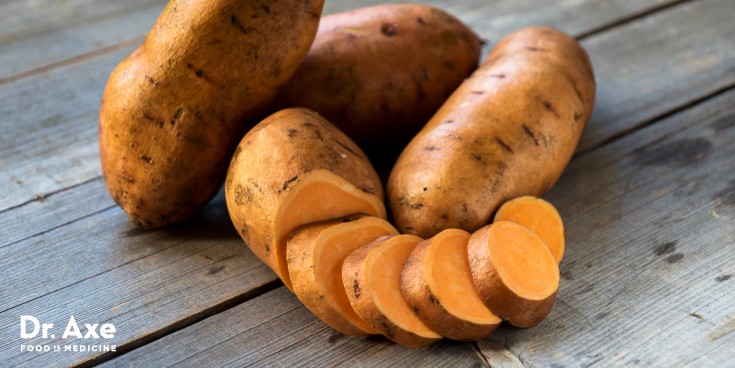
Sweet potato nutrition - Dr. Axe
One vegetable that I have grown fond of is the sweet potato. Gone are the days of sweet potatoes being the holiday casserole with sugary syrup and marshmallows on top. Now sweet potatoes are found in all forms of main dishes, side dishes and snacks. and all of these make nutritious and tasty offerings for our pantry.

I don't eat white potatoes, which are from the nightshade family, but sweet potatoes are different. A simple root tuber, sweet potatoes offer numerous vitamins and minerals,fiber, antioxidants and a good calorie to fiber profile to assist in regulating blood sugar. Here are some nutritional highlights of common sweet potatoes:
High in vitamins A, C, B6 and niacin and thiamine
High in minerals like manganese, potassium and copper
High in protein and fiber, low in fat

Our bodies benefit from sweet potatoes in that they help regulate blood sugar and aid in weight loss. They aid in our immunity and are high in antioxidants, and promote good vision. So give sweet potatoes another look when you're stocking your pantry this week. Or maybe you can substitute a sweet potato side dish for regular potatoes next time you're eating out.

For other details on the value of sweet potatoes for your pantry, check out this article from Dr. Axe's website: Sweet Potato Facts & Benefits


By the Way


Sweet potatoes are not yams, and yams are not sweet potatoes. They are two different kinds of root tubers. Most of the confusion happens in our western-market grocery stores because the two descriptions are used interchangeably (when they shouldn't be). Check out this article from Epicurious about the difference: Sweet Potatoes compared to Yams


Sunday, April 30, 2017

Another Great Grain

4.13

Looking for an all-star grain to add to your pantry? There is a lesser-known cousin to quinoa which has great nutritional density and is affordable and growing in availability. It's amaranth, a very tiny pseudo-grain originally from Mexico and Yucatan Peninsula.

Amaranth is not a seed or grain. It is a tiny grain-like structure from the flowers of the amaranth plant, but it functions much like a grain, and in some ways, even better. Amaranth is a protein powerhouse, and is high in manganese, iron, magnesium, calcium, phosphorus and potassium.

Compared to rice an oats, amaranth is a tremendous source of fiber. About 10 times more fiber than white rice, and 20% more than oats.That makes it a great addition to any meal or recipe.

Amaranth is great cooked like oatmeal, as a porridge, and can be seasoned and cooked like rice or quinoa for addition to a favorite spicy dish or salad. It can also be popped by tossing a tablespoon of amaranth in a dry, hot skillet. Once popped it is a great snack by itself or can be a topping on salads or soups, etc.

So give Amaranth a try as a healthy, nutrient-dense alternative to the usual starchy side dishes. You'll benefit from the great nutrient value of amaranth and will likely enjoy the nutty, slightly malty flavor.

By the Way


Bob's Red Mill packages and distributes Amaranth. If your local market carries other Bob's Red Mill products, but you don't see amaranth, be sure to ask at customer service to see if they could stock amaranth as well.


Sunday, November 22, 2015

Cucurbita Pepo Time!

2.80
Never heard of a Cucurbita pepo? I hadn't either until recently (Wikipedia is a great thing). Cucurbita pepo is the genus and species for the common pumpkin, and there's no better time for pumpkins than the fall harvest and Thanksgiving. And pumpkins make a great addition to a power pantry as source of vitamins C and A, lutein and beta carotene.

Pumpkins are a variety of squash, thought to have originated in North America, possibly in Mexico, over 6000 years ago. Now, pumpkins are a common cultivar in the United States and Canada, as well as all around the world. With 33 common varieties grown in America there is every size and shape available for decoration, texture and of course, cooking.

As a winter squash, they are planted in warm weather (July in the US) and mature just in time for late fall enjoyment. The name comes from Greek and French roots (pepon and pompon) which morphed into pumpion and then pumpkin. Quite the linguistic trail...

We enjoy raw pumpkin seeds in our pantry, which are a good source of manganese, magnesium, phosphorus, zinc, selenium and niacin. They are a great, nutrient-dense addition to salads, granolas and snack mixes.

For our Thanksgiving menu, I'm thinking of including a dairy-free pumpkin pudding... looking forward to trying a new recipe.

So dig into a seasonal favorite this month and next, and roast or steam or puree' some fresh pumpkin. Enjoy the smells and tastes of the harvest, and benefit from the great nutrition pumpkins offer.

By the Way


In the last 10 years, white pumpkins have grown in popularity. The 'Ghost', 'Baby Boo' and 'Lumina' are just a few. While everything inside these varieties is pretty much like any other pumpkin, the skins lack the beta carotene color found in common orange pumpkins.


Sunday, November 8, 2015

Get to the Root

2.76
One thing I've learned about a power pantry wellness lifestyle is that there is always something else to learn. Around every corner is a new adventure in information, if we're open to looking for it. And with the Internet at our fingertips we have every reason for our lives to be rich with good information.

I've been intrigued by root vegetables lately, likely because it is fall. I never paid a lot of attention to beets, turnips, parsnips and rutabagas. These are great vegetables and valuable sources of vitamins and nutrients. Fall is a wonderful time to roast some root vegetables and enjoy the tastes, textures and nutrition of the season.

Here are some thoughts on great root vegetables:

  • Rutabagas,or yellow turnips, are thought to be a cross between a turnip and cabbage, and have been cultivated since the 1600's in Europe. They are a great source of vitamin C.
  • Beets, or beetroot, are the taproot of the beet plant. High in folate and manganese, they are great cooked, raw or pickled. Some varieties have a high sugar content, like the sugar beet, and are cultivated for refined sugar production
  • Parsnips are a root very much like a carrot, but actually sweeter. They are rich in fiber, minerals and vitamins, and are an especially good source of potassium. Be careful with the shoot and greens of parsnips, as the sap is toxic and causes a rash a lot like poison ivy.
  • Turnips are part of the Brassica family, like rutabagas, but common turnips are the white variety. They are high in vitamin C, and the greens are commonly eaten as well, and are a good source of vitamin A, folate, vitamin C, vitamin K and calcium; greens are also high in lutein.

So give root vegetables a try with dinner one night soon. A simple roasting pan with coarsely cut up root vegetables and some diced turkey or chicken breast would make a great meal; a little salt and pepper, maybe a chopped onion or two and roast until the meat is cooked, and you can enjoy the tastes of the harvest season, and healthy, nutritional root vegetable as well.


By the Way


Carrots are a staple root vegetable which are common, nutritious and tasty, and are a great source of vitamin A and beta-carotene. Did you know that carrot come in a variety of colors? While orange carrots are found in the produce section the world over, there are also red, purple, pink and more.


Thursday, October 22, 2015

2015 Pantry Additions

2.72
We're past the 3/4 mark in 2015, and I hope it's been a great year for your health, your wellness lifestyle, and the contents of your pantry.

I thought it would be good to do a quick check up on how our pantries are faring... have we made some improvements to what we're shopping for and stocking in our fridge and pantry? I've noted great additions to our pantry this year: healthier chips (sweet potato chips made simply with sunflower oil and sea salt), healthier cereals (a great sorghum-based cereal with a bit of cane juice and chia seed; another is just crisped rice with sea salt and a bit of cane sugar; puffed millet as well), homemade guacamole almost every week. Our fridge has a selection of almond milks (and limited cow's milk any more) and some great kinds of hummus, and all sort of fresh veggies.

If you could use a boost on some healthy pantry suggestions and additions, consider this top 10 list of healthy food, which originally came out as a 2015 healthy food trend watch list. This is courtesy of www.everydayhealth.com :
2015 Healthy Food Trends

This is a great list! There are some in the top 10 I need to try out, like teff, and beet greens, and nut-based vegan cheese (that sounds interesting). Something like rutabagas bring back childhood memories, and maybe it's time to try them again.

So take a fresh look at your pantry, and see where you can step it up. There are still 2 months in 2015, which gives us plenty of time to try some new, unique foods, and make a solid addition to our power pantry.

By the Way


Don't overlook how far you have come... have you been trying to live by power pantry concepts this year, and stock your pantry accordingly? Think back to what was in your pantry a year ago, or 5 years ago... I know we have some crazy, unhealthy stuff that was a regular part of our diet and eating. Our selections are now healthier, and nutrient-dense, and that's been great for wellness for our whole family.


Sunday, June 28, 2015

Taking a Break

2.46
This past week we had an awesome mini-vacation which landed us in Gloucester, MA. Its quintessential New England, historic flair warrants a longer stay next time we're in the area. The area has phenomenal, fresh seafood, and Gloucester itself is known as America's oldest sea port. Very cool.

While we were there, we treated ourselves to a nice dinner out to enjoy the local seafood. And I decided to suspend my power pantry guidelines and order what looked and sounded good on the menu. While Jen had the baked haddock, which was awesome, I got the fisherman's fried platter, with fresh, tender shrimp, clams, calamari and a haddock filet, all lightly breaded and deep fried. No plant-based choices or whole food concerns here. I have never had shrimp that were that tender, much less the clams and calamari... it was delicious, and although I didn't have a salad or veggies (beyond a little coleslaw), I thoroughly enjoyed the meal.

There's always time to make great power pantry choices in what we're eating and drinking, and there are times to set uber-healthy choices aside and enjoy a 'feast'. That's what we did on our trip... A great guide is an 80/20 approach: 80% of our food should be a good choice, ones our bodies benefit from nutritionally; the other 20% can be less intentional American fare. And the 20% isn't always a gooey, sugary dessert; maybe it's the fried platter... (I can't remember the last time I had ketchup, not that there's much wrong with ketchup, I just don't eat it anymore. On Wednesday night, I had ketchup with my fried seafood and fries... mmmmmm...)

So settle on your convictions to pursue great food and drink choices, focusing on nutritional density, and a plant-based diet. Then, here and there, be willing to take a break and enjoy something that sounds good, looks good, or comes highly recommended. Doing this helps us redouble our effort and conviction to make power pantry choices a majority of the time.


By the Way


Check out the post I did last year about an 80/20 approach to our wellness choices:
Go 80/20

This is a great guideline to help us organize and stock our power pantry and fridge for health-promoting choices.


Wednesday, May 6, 2015

It's Your Turn

2.33
I like Tony Horton, creator of P90X and P90 workouts, and host of a really cool YouTube Channel. See my previous post on Tony here - I appreciate what he does because it is simple, reproducible and stands as a lifestyle wellness resource.

Not only does Tony offer valuable workout guidance to bring health and longevity to our daily routine, he's a kindred spirit when it comes to healthy eating. Below are a couple videos from the Tony Horton YouTube Channel. The first one is about eating more and losing weight. You may say, is that possible? The answer is a resounding yes (in my own experience, I eat a lot of great food and snacks, every day, and maintain at my target weight just under 160 pounds, and I'm 6'+ tall...):


The second video gives six fundamentals for healthy eating. Again, these are spot-on, focused on eating real, nutrient dense, fiber-rich foods, and staying hydrated:


And a great encouragement is at the end of the second video, to pass on the content. Tony likes to say, "it's your turn," meaning he wants us to engage... take a next step in our own journey, and then pay it forward by passing along wellness guidance we are living out.

Maybe there are a few simple wellness things you've made a part of life, like adding ancient grains or reducing or eliminating gluten and dairy. Maybe you're walking regularly or bought an activity tracker to keep an eye on your daily and weekly activity. If you've done these kinds of things and benefited from it, then it's your turn... time to hand good guidance off to someone important to you and encourage them in their journey. A neighbor, co-worker, relative... shoot them this blog post or send them to a YouTube channel like Tony's. You'll feel good about being a resource, and it just may change someone's health and life.


By the Way


I like that Tony is a 90/10 or 80/20 eater (click here for a previous post on this idea). What I mean by that is he gets a strong majority of calories from healthy, nutrient-dense foods (the 80%-90%) and limits unhealthy and 'comfort' foods (keeping these at 10% - 20%). This allows an occasional treat, and the empty calories and fleeting 'pleasure' that goes with it, but reaffirms the guiding commitment to healthful choices.


Sunday, January 11, 2015

The Magic Bullet

2.4
I got the coolest health-nut gift for Christmas... a NutriBulletPRO 900 (by Magic Bullet). OohRah! This is the ultimate blending machine, where nutrition is concerned. 


When it comes to getting the most of the whole fruits and vegetables we eat, there are two schools of thought for making it into juice. Overall, it is agreed that breaking down the cell structure of the food extracts and releases more of the nutrients (like antioxidants, vitamins and minerals) making these absorb-able and nutritionally available. The difference is in whether you 'juice' or 'blend'. When you juice, you extract almost all of nutrient-rich juice and leave the pulp behind (the skins, fiber, seed hulls, etc.) If you blend, you completely pulverize the whole food, breaking down the juice, fiber, skins, seeds, etc., into a slushy, whole-food drink of whatever you're blending. I'm definitely a blender, not a juicer.

The concept for blending whole fruits and veggies is simple: fill the NutriBullet cup half way with greens (spinach, collard greens, kale, romaine, etc.) top off with any kind of fruit (could be frozen, to lend a cold, slushy consistency to your drink), add filtered water and blend for about 15-30 seconds. That's all it takes.

For an extra boost, you can add things like chia or flax seeds, almonds, walnuts, maca powder (more on that in a future post) and cacao powder. Any of these will give your drink a nutritional blast of vitamins, antioxidants, healthy fats and more.

At this point we've made numerous morning drinks in the NutriBullet, as well as a great dairy-free chocolate pudding, a rich, spicy chocolate / chia pudding, and an interesting take on vanilla pudding (using chia seeds). It makes an incredible banana 'ice cream' (just blend frozen bananas, scoop and eat - awesome... especially when topped with the chocolate pudding...)


So if you want to get more from your whole fruits and veggies, and get your daily supply of greens in a convenient way, consider blending (or juicing) to give your health a great boost.

By the Way


One of the best things about the NutriBullet is how easy it is to clean up. Because the blender 'pitcher' is actually the drink cup, you just turn the cup upside down to blend (the blades are mounted in a sealable lid) and once blended, turn right-side-up and enjoy. Very cool.

There are other great drink blender options as well, like the NutriNinja... but I'm psyched about my NutriBullet...


Monday, December 1, 2014

Be Dense

1.74
Hopefully you had a great Thanksgiving, as I did with my wife and family. We are grateful to have shared a delicious butterball turkey with all the trimmings (although our sweet potatoes didn't have the little marshmallows on top...) And I have to say we did fairly good in the nutrient density department, respecting our power pantry choices. We made some great substitutions (like a gluten free stuffing along with regular stuffing) and subtractions (our green beans were sans cream of mushroom soup and fried onions...although they had some crumbled bacon...) The big question is whether our holiday food choices are worthwhile when it comes to nutrient density, that is, how much nutrition is packed in each calorie we choose to eat.


I've posted about nutrient density before. It's a concept popularized by Dr. Joel Fuhrman, one of my favorite nutrition-focused writers and thought leaders. Dr. Fuhrman's formula for health is H = N/C, where H stands for health, N stands for nutrients, and C stands for calories. So our health can be determined by how many nutrients are packed into the calories we consume, our nutrition per calorie. Overall, he refers to this N/C concept as nutrient density.


I had a good nutrient-density conversation with a business friend last week, concerning his health journey and his growing awareness of healthy eating. He is benefiting from nutritional adjustments to help him overcome years of back pain. The great thing is that it's working! Being conscious of the nutrients in the food we choose to eat can make all the difference in the world.

You can review that previous post on nutrient density for some other food-choice ideas, but the point for our holiday food choices is to focus on whole foods over processed foods, and to overwhelm our diet with calories from high-nutrition sources. Yes, there may be holiday cookies and pies, and those little sausages every now and then, but by making some power pantry choices of a big salad, some steamed veggies and brown rice, and desserts focused on berries, fresh fruits and pomegranates, we can lean into high-nutrient choices. The result will be a deep-breath kind of confidence come January, and while we'll have really enjoyed the holidays, we won't be sorry at all for our food choices. Here's to some wonderful Christmas preparations and enjoyment of the season!

By the Way


What we're really after, nutritionally, with our whole food choices are phytochemicals, or phytonutrients. These are the naturally occurring healthful constituents of unrefined plant foods, and it is the basis of nutrient density. For instance, a 100 calorie portion of broccoli has almost twice the protein of a 100 calorie portion of steak. And kale and romaine pack way more nutritional punch per calorie than animal-based foods, grains or even beans and seeds. So stock up on your fresh veggies this holiday season!


Thursday, November 6, 2014

Milk Does a Body Bad?

1.67
I'm no longer a fan of milk. Don't get me wrong, I love a cold glass of whole milk (like once a year); to me, it tastes like drinking ice cream. A friend and I were having breakfast yesterday and it came up about limiting or eliminating dairy from our diet. I said we've gone significantly dairy-free as a family, and have reaped huge health benefits. Our kids are more healthy now, where they used to have any number of colds, bugs, stomach aches and passing illnesses, not to mention all the facial and skin irritation and breakouts. It's like we can literally turn on sickness and turn it off, just by how much dairy we eat (or don't eat).

I know what you're thinking... "Muller, that's sounds off-the-wall... milk 'does a body good', and we've been bombarded with 'Got Milk?' for decades... surely a dairy-free perspective is radical and ill- conceived..." Don't judge too quickly, though. I think everything is born out in experience; our own cause-and-effect evidence should win the day. Have you tried to go substantially dairy-free for 4-6 weeks to see what would happen?


I'm sure a next thought is, "where will I get my calcium?" We've been lulled into thinking dairy products are our best and only available option for calcium. Did you know that simple whole foods like sesame seeds, romaine, collard greens, spinach, kale, sardines and even broccoli are great sources of calcium? Big Dairy has us all mind-numbed into thinking that milk is the one and only source of calcium... I beg to differ.


A significant draw-back with dairy, which very few people in our western culture know or talk about, is that we invite inflammation and sickness into our bodies whenever we consume it. Check out some of these expert perspectives on the drawbacks of dairy in our diet:

Dr. Amy Myers - The Dangers of Dairy (on MindBodyGreen.com
Dr. Mark Hyman - Dairy: 6 Reasons You Should Avoid It
Dr. Joel Fuhrman - Protect Yourself Against Osteoporosis 

Need further evidence? Jen found this article on FoxNews recently:
3 daily glasses of milk linked to higher mortality rate in women

For decades, we've been overwhelmed with marketing on benefits of dairy, but the truth is, dairy is a significant source of inflammation and stress on our immune system and health. And calcium is readily available in a multitude of healthful whole foods if we simply do a little research. So give it your own test, and see if limiting dairy brings you some healthful benefits. I bet it will.


By the Way


I often say that cow's milk is a perfect food for one recipient: a baby cow. As humans, a mother's milk is the perfect food for a human baby for the first year or two; that's the way God designed it to work. Realize that there are whole cultures on our globe which consider the consumption of cow's milk to be not only strange, but gross. Why would we consume the milk of a 2,000 pound bovine? Ewww...

I've even heard it said that in California dairy is maligned in the same way as cigarettes (folks from the west coast, feel free to weigh in with a comment...) Dairy consumption is well out of the mainstream in those more progressive foodie locales. Maybe pushing against dairy is a bit ahead of the curve... check in with me in 15 years and we'll see...


Sunday, August 17, 2014

America's Protein Habit

1.44
As a nation, we eat way too much protein, especially animal protein. I know I've already lost some of you with that simple statement because it sounds extreme, like henny penny looking for the sky to fall (raining with bacon and fried eggs, in this case). We've been sold this strange bill of goods that beef and chicken and dairy and eggs are great for our health, born mostly out of our farming history and successful industry lobbying of the past century. As Washington's regulations go, so goes our nation... and our health is going right down the sewer (kind of like Washington?)

Some folks have even been convinced that vegetable proteins are incomplete, and we'll be lacking vital amino acids if consume a plant-based diet and skip the meat, dairy and eggs. That's factually incorrect. Our bodies can do just fine on plants alone, and counting all the health issues that result from eating animal-based foods, we'd do much better to side with the vegetables.

I've often conveyed that I'm a fan of Dr. Joel Fuhrman and his book "Eat to Live". Consider this passage about the protein myth from page 140:
A healthy diet, we were taught, supposedly centered on meat and milk. Protein was thought to be the most favorable of all nutrients, and lots of protein was thought to be the key to strength, health, and vigor. Unfortunately, cancer rates soared. As a result of scientific investigations into the causes of the disease, we have had to rethink what we were taught. Old habits die hard: most Americans still cling to what they were taught as children. There are very few subjects that are more distorted in modern culture than that of protein.Keep in mind that we do need protein. We can't be healthy without protein in our diet. Plant foods have plenty of protein...and you don't need to mix and match foods to achieve protein completeness. Any combination of natural foods will supply you with adequate protein, including all eight essential amino acids as well as nonessential amino acids.

Yes, old habits die hard, but they do eventually die. Unfortunately, it is taking generations of sickness and disease (heart disease, diabetes, and cancers, especially) to get the attention of our nation. We have terrible eating and wellness habits in our western culture, and thankfully the solution is really simple: lean hard toward a plant-based diet.

Here are a couple did-you-know facts. From a nutrient density standpoint (ie, how much nutritional bang do we get for the calorie buck, from the foods we eat) green veggies beat everything else - hands down. When looking at the protein content per calorie, green vegetables register about 50% of their calories from protein content, and vegetables in general supply about 10% of their calories from protein. That's good nutrient density, and a great protein source.

There is more and more evidence entering the mainstream about the inflammation caused by animal-based foods, and how that results in plaque in our arteries, obesity, diabetes, many common cancers and numerous other health issues. More on these in a future post. Suffice it to say that focusing on a plant-based diet, and following Dr. Fuhrman's 'GBOMBS' protocol (see post here) will get you exceptional nutrition, plenty of protein, all the amino acids you need, help you shed pounds and feel incredible.


By the Way


Check out "Plant Power" advocate, Rich Roll, and his great information on successfully living a vegan lifestyle. Rich is especially unique because he is an ultra-endurance athlete. Rich has a great website where you can catch some of his content he's shared with CNN and Men's Health magazine, as well as his #1 book on Amazon - www.richroll.com 


Thursday, July 10, 2014

A Simple Alternative

1.34
I was talking with a friend the other day and he shared about a family member with a gluten sensitivity. While they are relieved to have a solution for the health and gut issues this family member was suffering, they're still getting used to the lifestyle changes needed to deal with a food intolerance.

We went on to talk about the top six food sensitivities (I told him I had a post about these, describing dairy, wheat, corn, soy, peanuts and eggs as culprits, in that order.) He was aghast. He couldn't believe that these more-than-common foods were the source of health issues for millions of people. I explained that they aren't allergies (acute issues) but intolerances (chronic issues... they manifest slowly and in an irritating way.) His biggest question was, what do you eat if you're cutting out these six common foods, as you would for a time in an elimination diet?

I think the answer is simple, and I described six essential food categories which can help us all eat 'clean'. There are plenty of nutrient-dense foods which our bodies crave, are readily available, and great for our health. I've mentioned numerous time in Power Pantry posts that I'm a fan of Dr. Joel Fuhrman, an MD from New Jersey focused on nutritional excellence.

Dr. Fuhrman has published a short-list of the most healthful foods - basically the top of the list for eating clean. He describes these in short as "G-BOMBS", which stands for greens, beans, onions, mushrooms, berries and seeds. These six foods work magic for our metabolism, provide essential amino acids, enzymes, micronutrients and phytonutrients. Dr. Fuhrman promotes them as so important, we should be eating these every day and they should be a significant portion of our regular diet. Here are the categories in brief:


  • Greens - as in leafy greens: kale, spinach, romaine; the darker the better. (Sorry, iceberg lettuce doesn't count as greens... they're 'pale greens' or even 'whites' at best). 
  • Beans - as in legumes: lentils, chickpeas, pintos, black beans, navy beans, peas etc. These are high in protein and soluable fiber, which are great anti-diabetes foods and good for weight loss
  • Onions - and other members of the allium family like garlic, scallions, leeks, shallots. All of these are great for blood flow and heart health, and have documented anti-cancer properties
  • Mushrooms - these have great anti-cancer benefits, are anti-inflamatory and stimulate our immune systems; note, mushrooms should only be eaten cooked, as several types of raw culinary mushrooms contain carcinogens which dissipate when cooked.
  • Berries - these are gems of antioxidants, healthy calories and vitamins. Blueberries, black berries, strawberries are all true super foods. Note: the darker the better; darker color indicates higher levels of good antioxidants. And you can buy affordable, frozen berries year-round in the freezer case of your favorite grocery store.
  • Seeds (and nuts) - as in flax, chia, hemp, pumpkin, sunflower, sesame, walnuts, almonds, etc. These are high in protein, good fats, minerals and fiber. There is greater benefit to raw seeds and nuts than roasted, so shop for raw whenever possible.


This is a great list, and will yield fulfilling and tasty, healthful meals. I see G-BOMBS as an essential, fundamental fall-back position for our power pantry. When in doubts, reset to these six simple, healthful foods. Of course there will be healthy whole grains (brown rice, oats, quinoa) lean meats (poultry and fish), sauces and salsas and healthful condiments, and some low-fat dairy (like greek yogurt) to round out meals, but G-BOMBS provide an essential foundation for a healthful, non-irritating power pantry diet.


By the Way


You can check out Dr. Fuhrman's descriptions of G-BOMBS here:
      Dr. Fuhrman's G-BOMBS article
I love that he annotates all of his writings and research. Have any doubts in what he's saying? Then look it up - he's not shy about taking a confident, definitive approach to his wise counsel. 


Wednesday, June 18, 2014

Food is Medicine

1.28
There is a saying attributed to Hippocrates from almost 2,500 years ago, "Let food be thy medicine, and medicine be thy food." Even in ancient times (or maybe especially in ancient times) nutritional excellence was recognized as vital for good health. In our western / American culture, we've slid very far from any semblance of nutritional excellence. The good news is how easy it is to return to it.

There is mounting evidence of how right Hippocrates was, and how beneficial a whole food, plant-based diet is to our health. Consider The China Study, where Dr. T. Colin Campbell did exhaustive research of over 50 diseases in the US and compared the results on our population to that of rural China. The point was that there are vast regions of China where a very homogeneous, healthful diet was consumed by incredibly large populations. By studying heart disease, diabetes, cancers, etc., and comparing these to the diet they were eating, you could draw valuable conclusions about how eating habits affected health.


Their biggest conclusion was that western diseases (coronary artery disease, diabetes, and numerous cancers) were directly related to the levels of animal-derived cholesterol in the blood stream. The good news was that a plant-based diet would reduce and even reverse the damage done by a high-cholesterol diet. Nutritional excellence is beneficial for lowering cholesterol and providing vital micronutrients, providing healthful results across the board, not just for a specific ailment.

Check out the overview of The China Study here (from Wikipedia):
http://en.wikipedia.org/wiki/The_China_Study 

The conclusion of The China Study, according to cardiologist Dr. Mimi Guarneri, founder of the Scripps Center for Integrative Medicine: food is related to positive and negative health outcomes; what we eat matters! 

It is fascinating to me how our bodies willingly and obediently go along with whatever foods we eat, and do their best to assimilate that food (whether nutritious or not) and keep going. The slow decay we see in our physical health as a society is directly related to the fact that we don't see the cause and effect of our eating habits. There is enough delay between eating an un-nutritious food and the ailments it may cause, that we don't draw any correlation, and go on literally eating ourselves to death. The great news is that at any time we can begin to live as if our food is medicine, and the medicine we need is in our food, and bring our bodies back to functional health and eventually optimal health.


By the Way


There is an ancient Indian precept which clearly frames the issue of our food functioning as medicine:
"When diet is wrong medicine is of no use.
When diet is correct, medicine is of no need."

A bold statement, but that says it all.

Want something else to chew on? Check out the documentary, "Forks Over Knives" featuring Dr. Campbell and his research.


Wednesday, June 11, 2014

Going Mediterranean

1.26
There's an interesting tension between our modern world and the ancient world. We're fast; they were slow. Success for us is often defined by material possessions; success for them was about passing on a generational legacy. And concerning our food supply, ours is industrial, and theirs was local (and organic).

When I think of what to stock in our pantry, I often think of a continuum where the standard American diet is on the left end, and a Mediterranean diet is to the right. (When I say Mediterranean, think France, Italy, Greece, Israel.) The far right of that continuum would be a vegan diet, which is too extreme for most (although it is a perfect regimen for an occasional detox and reboot.) The best place on that continuum is somewhere right of center where we get a lot of healthy micronutients and a small amount of regular animal proteins. This is often considered a 'flexitarian' diet, or 'nutritarian' as Dr. Joel Fuhrman likes to describe it. It's not vegetarian or vegan, but has an overwhelming amount of calories coming from healthy greens, beans, fruits, berries, etc.


The challenge for us is to move our pantries along the continuum from the standard American diet's industrialized foods toward healthier (Mediterranean-style) choices. Grains would be unrefined, whole grains like brown rice and whole wheat; greens would be dark, leafy greens like romaine and kale and basil. Fats would come from olive oil an avocado. Proteins would come from beans and legumes, and some fish and shellfish.


What would your pantry and fridge look like if you moved a little further to the right on that continuum? Less processed foods, more whole grains and beans... taking some additional time to prepare your meals and linger over your eating choices? Maybe doing more of your cooking with a family member, including conversation and doing life together? These would all be good things. Maybe today is a day to grow away from industrialized foods toward more wholesome choices.


By the Way


The healthful choices at the far right of the continuum I described aren't new or radical. Veganism has its issues (being mindful of particular essential fats and vitamins which may be lacking without some animal proteins) but the benefits far outweigh any deficits. Consider Daniel from Biblical times. His story is told in the Old Testament book of Daniel; in the first chapter, we get a glimpse of his nutritional excellence that gave him and his three friends a distinct advantage. Have a look, here - it's an interesting and bold position... a power pantry position: Daniel chapter 1.


Wednesday, May 7, 2014

Go 80/20 for Healthier Choices

1.18
I started getting into a wellness lifestyle in 2010, and it was a couple of years until I ran across the idea of eating proportionally healthier in my diet. Including whole foods and healthier pantry choices in our lives isn't an all-or-nothing proposition. It's not a valve we can turn on 100% whenever we want; it takes time to incorporate a wellness lifestyle, and to build up to eating more of our foods from healthier choices.

Here's a simple idea I first came across in 2011 about proportionality in our food choices:
If you're maintaining your health, then 60% of your diet should come from whole, plant-based foods, and 40% of your diet can be basically anything you like. So that's a 60/40 split.
If you're trying to regain health (overcome a cold, lose a specific amount of weight, get past joint pain from inflammation, etc.) then 80% of your diet should come from whole, plant-based foods and 20% can be conventional American fare.


Here's how that 80/20 split would look over a week. Let's assume you eat 3 meals a day for a week; that's 21 meals (let's round to 20 to make the math simple). If 80% of your meals come from the healthier choices, that's 16 meals in the course of a week. If 20% of your meals can be standard fare, that's 4 meals in a week. At 4 meals a week, that's less than one conventional meal a day. Hmmmm... I think if you're eating that much healthy food in a week, you're bound to improve your health.

Can you see how this would influence your pantry? Stocking up on lots of greens, beans, fruits, seeds, legumes, healthy seasonings... just to generate 16 meals a week. That's quite a commitment, but what a great commitment! No doubt you will heal your body and regain or achieve great health by living out this kind of diet-style.


By the Way


I have written that I really appreciate Dr. Joel Furhman's 'nutritarian' approach to healthy food choices. He emphasizes a whole-foods, plant-based diet, and goes so far as to suggest a 90/10 split for our health food choices compared to conventional foods. With all that good food in our pantries and fridges, there isn't much room for Lucky Charms and bacon... just sayin'.


Sunday, March 30, 2014

Micro Over Macro

The fridge is part of our pantry
1.8
So, when it comes to having a power pantry (and realize that any time we talk of our pantry, it includes our refrigerator... they go together), are there some foods that are fundamentally better than others? The short answer? Yes! Last week's post was about eating real food, and that's the place to start: a whole foods, plant-based diet is the best foundation.


But what's the big deal about the whole foods and veggies? Food is food, right? Actually, no, not all foods are created equally, and there is growing research that shows how the food we eat provides extensive information to our bodies. Nutrients actually engage our genetic code
DNA Double Helix (Wikimedia Commons)
and turn certain proteins on and off, with the ability to lead to healthy outcomes or unhealthy outcomes. That sounds like a big deal, and actually it is. The food we eat, and especially the nutritional quality of the food we eat, matters.


This gets into the nutritional concept of macro-nutrients and micro-nutrients. Micro-nutrients are the beneficial proteins, carbohydrates, minerals and enzymes found in plant-based foods like vegetables, fruits, seeds, nuts, berries and some plant-based oils. Macro-nutrients are the animal proteins, carbohydrates and fats found in basically everything else: meats, grains, dairy, starches, sugars, fats. Like I mentioned last week, our bodies crave micro-nutrients (the fruits and veggies); our bodies tolerate macro-nutrients, and will always be trying to overcome the stress those foods create in our bodies.

What does it look like when good nutrients interact positively with our genes and metabolism? I think our bodies heave a big sigh of relief when we eat whole foods and a plant based diet. Conversely, our metabolism stresses out under the burden of animal proteins, dairy, heavy starches, sugars and fats.

A key to having a power pantry is overwhelming our food choices with micro-nutrients and limiting our macro-nutrients. Think of if in terms of ratios. To gain a healthful power pantry, a good goal is an 80/20 split of micro-nutrients to macro-nutrients. So 80% of our calories come from micro-nutrients--healthful, whole, plant-based foods; 20% come from macro-nutrients (meat proteins, starches, grains, animal fats). To maintain good health, maybe you can stretch it to 70/30. A noble wellness goal: 90/10.


By the Way


Real food: thumbs up
Food-like product: thumbs down
It can take a while to wrap our minds around what foods are actually good for us, and which are really man-made food-like products. How do we discern which is which? The whole food is the one that looks as close as possible to how it came from the earth. That's real food. If it is processed, refined, filtered, packaged, then it becomes more of a food-like product. So: romaine lettuce is a whole food; toaster pastries are a food-like product... you get the picture.

In future posts we'll look more closely at things like refined 'white foods', and other man-made food-like products, and chemical additives (sweeteners and flavor-enhancers and such), all of which are helping western culture eat itself to death.

There's benefit in the power of the pantry. Remember our health is in our hands!


Sunday, March 23, 2014

Eat Real Food

1.6
If you've been wondering when I'd get to some food-related thoughts on a power pantry, your wait is over. While we need to have a reason 'why' we want a wellness lifestyle, and having a wellness vision keeps us on track toward a healthier existence, at some point we need to ask 'how'. And how starts with this wise counsel: eat real food!

What do we mean by 'real food'? The truth is, we industrialized our food supply 100+ years ago, along with the revolution that changed how we work and produce goods. Before then our food was basically 'local' and 'organic', and much better for our health. Now we have engineered food-like products that are edible, technically, but aren't really food, and our bodies don't recognize them as nutritional.


Real food is simply 'whole food'. Think of the apple (with the skin) instead of apple juice; the filet of salmon instead of the fish stick. Brown rice instead of white rice; fresh salad greens with onions, instead of fried onion rings. Whole foods, especially fresh fruits and vegetables, are what our bodies crave. Our metabolism is waiting on us to give it healthy food, every meal, every day. When we make great choices, our bodies pay us back with good health; when we make poor choices... well, we are what we eat.


Consider a quote from the cofounder and co-CEO of Whole Foods, John Mackey:
"Eating a whole-foods and plant-based diet and avoiding processed and refined foods can completely transform our lives. I've seen hundreds of people I work with lose more than 100 pounds, reverse type 2 diabetes, or recapture their health by making permanent dietary changes..."

A whole foods, plant-based diet leads us away from industrialized, engineered foods, back to foods that our bodies recognize as nutritional. In western medicine, we have a pharmaceutical and surgical response to disease. The reality is that prevention is the best intervention, and great disease prevention starts with eating real food. It's a wellness lifestyle, not a diet. The incredible ability of our bodies to naturally heal is revealed and accelerated when we choose a whole foods, plant-based diet.

I'm not talking about becoming a vegan or vegetarian. I'm still an omnivore, and eat a variety of available, healthy foods, with real foods making up most of my calorie intake. We'll talk more about that in upcoming posts...

The fundamental key to a power pantry? Wholeness... a completeness in our nutritional choices that lends itself, eventually, to completeness in our lives overall. And eating real food is a tremendous start.


By the Way


I had a friend who used to describe good nutritional choices like this: "If it doesn't sprout or rot, don't eat it." That's a whole food, plant-based perspective... (Note that unprocessed, un-engineered foods--that is, real foods-- usually sprout or rot.) With that in mind, we decided to reproduce an 'experiment' we heard about.

We got a kids' meal from a popular fast food place, and want to see it if ever rots... previous internet experiments indicate it won't. We're putting ours up against a salad from the same restaurant (and some apple slices from the kids' meal - you'd think the apples might be okay and just dry out... and the salad will eventually rot... we'll see.) Here is our baseline photo, and we'll be updating the progress in future posts:


Our burger experiment on Day 1 (3/20/14)