Showing posts with label vegetables. Show all posts

Sunday, May 6, 2018

Sweet Pantry Addition

5.10

All foods are not created equally. If I've learned anything on my wellness journey, it is that truth. I know after years of learning about healthful eating, and then living out my convictions, that some foods are great for my everyday diet, and others are not.
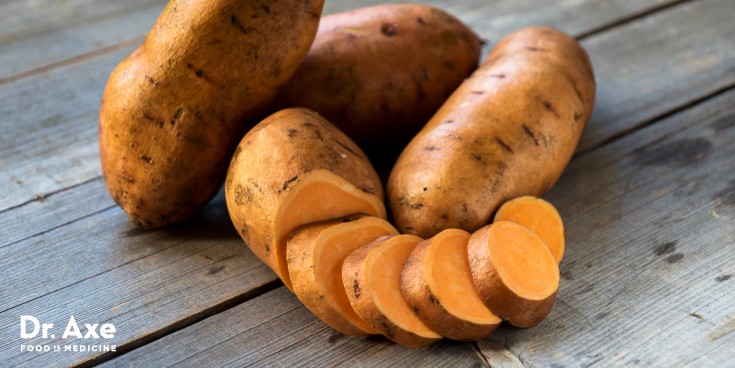

Sweet potato nutrition - Dr. Axe
One vegetable that I have grown fond of is the sweet potato. Gone are the days of sweet potatoes being the holiday casserole with sugary syrup and marshmallows on top. Now sweet potatoes are found in all forms of main dishes, side dishes and snacks. and all of these make nutritious and tasty offerings for our pantry.

I don't eat white potatoes, which are from the nightshade family, but sweet potatoes are different. A simple root tuber, sweet potatoes offer numerous vitamins and minerals,fiber, antioxidants and a good calorie to fiber profile to assist in regulating blood sugar. Here are some nutritional highlights of common sweet potatoes:
High in vitamins A, C, B6 and niacin and thiamine
High in minerals like manganese, potassium and copper
High in protein and fiber, low in fat

Our bodies benefit from sweet potatoes in that they help regulate blood sugar and aid in weight loss. They aid in our immunity and are high in antioxidants, and promote good vision. So give sweet potatoes another look when you're stocking your pantry this week. Or maybe you can substitute a sweet potato side dish for regular potatoes next time you're eating out.

For other details on the value of sweet potatoes for your pantry, check out this article from Dr. Axe's website: Sweet Potato Facts & Benefits


By the Way


Sweet potatoes are not yams, and yams are not sweet potatoes. They are two different kinds of root tubers. Most of the confusion happens in our western-market grocery stores because the two descriptions are used interchangeably (when they shouldn't be). Check out this article from Epicurious about the difference: Sweet Potatoes compared to Yams


Sunday, November 19, 2017

Cheat Wisely

4.31

The holiday season is upon us! Thanksgiving is this week, and our kitchens and diets will be bombarded with all the food bounty we can tolerate. And with all that food comes a lot of choices.

Years ago, pastor Andy Stanley wrote a book called, "Choosing to Cheat," with the premise that every day brings us choices that will add value to those around us, or take value away. The point in choosing to cheat, is to cheat work in favor of our spouse and family. Cheat a good opportunity for the best choice. Cheat the thing we want to do for the thing we know we need to do - the choice which will have lasting value in our lives.

The same goes for our wellness lifestyle. This week, and in the weeks ahead, there will be innumerable temptations of delicious sweets and savory dinners. There will be processed favorites (mushroom soup on the green bean casserole, and eggnog (did you ever check the nutritional label on eggnog?)) and homemade standards (the twice-baked sweet potatoes with honey and marshmallows). And the choices will abound.

Is it a problem to enjoy the holiday delicacies? No, not at all, but we need to cheat wisely. Don't throw all caution to the wind, and end up in a carbohydrate coma or artificial-preservative-shock. If your body is accustomed to whole foods, and nutrient dense eating, lean toward those choices whenever possible.

If you're traveling for the holiday, offer to take along a dish which reflects your wellness values. Go simple, like our grandparents used to cook. It doesn't need to be full of tofu and seaweed (my grandparents wouldn't have even known those were edible), just something simple, healthful and delicious.

So enjoy all that this holiday season brings. Savory the down time, the visits with family and friends, the wonderful meals, and the reminders of how blessed we are to live in a nation with all of this abundance.

By the Way


As the years add up in a wellness lifestyle, you'll find recipes which reflect your healthful values, and are just great food. Things like homemade cranberry sauce to go with the turkey. Simple, easy to make biscuits, with only 3 ingredients. I have a shortbread recipe that I'm looking forward to making again. ...And the list grows year by year.


Sunday, September 4, 2016

Returning to the Good Side

3.26

I was reminded this week of the value of discerning choices in my pantry and fridge. Last year I had posted about acid-alkaline balance in our bodies and how it is related to our food choices (From the Good Side, Jan 2015). This week I realized how far my own recollections had slid from the reality of healthful choices where acid/alkaline balance is concerned.

What is acid/alkaline balance all about? Our bodies do a miraculous job of maintaining consistent blood and tissue pH, even with the untold stresses which can put our bodily pH out of wack. Stress results from metabolizing things like refined foods and meats, dairy and most grains. When absorbing these less-healthy nutrients into our bodies, a state of low pH (an acid condition) is generated, inching our blood pH below the ideal 7.37 (which is just slightly alkaline).Veggies and fruits help stabilize bodily pH by the alkaline-forming nature of digested plant foods, keeping the pH in our tissues slightly alkaline, and keeping our bodies healthy.

If we're not eating fruits and veggies to counteract acid-forming foods, our bodies will compensate for the acid and use other means to neutralize it. As Dr. Joel Fuhrman stated in his book, Eat to Live: "Animal-protein ingestion results in a heavy acid load in the blood. This sets off a series of reactions whereby calcium is released from the bones to help neutralize the acid." Literally, our bones give up some density in the form of calcium compounds, in order for the slightly acidic state to be rebalanced back to slightly alkaline. The result is that we lose bone density, and end up with a calcium deficit in our bodies.

The slightly acidic state can also promote general inflammatory issues in our bodies, lending to health problems like arthritis, diabetes, high blood pressure, osteoporosis and it can allow numerous cancers to take hold.

So, how do we keep our diet on the good side? Check out the the learning page at pHreshproducts.com. They offer extensive explanations of acid-alkaline issues in our diet and suggest the alkaline-forming foods which will counteract the acid-formation. Once you've wrapped your mind around which foods are acid-forming (unhealthy) and which are alkaline-forming (health-promoting) take a long look at your pantry and fridge, and see how your current food inventory measures up. Maybe you'll find some adjustments you need to make, just like we did this past week...


By the Way


Here is a tremendous chart to get you started on understanding acid-forming and alkaline-forming foods. Make choices from the good side, and your body will thank you.


Sunday, July 10, 2016

FitnessPals and Beet Juice

3.21

I was talking with a business colleague a few weeks ago about some wellness discoveries he is making, and how he is benefiting in significant ways. He also shared one of his recent discoveries about beet juice with me, which got me thinking and researching. One thing he tried out some time ago was MyFitnessPal, and took it seriously, logging his food choices consistently and making appropriate additions and deletions. Now he is training for and running in half-marathons and has seen his weight drop and energy increase.

I love hearing power pantry stories like his. Stories outlining how life wasn't terrible or unhinged, but could obviously be better. And then this new world of nutritional excellence and discerning choices opens up, and voila', unanticipated benefits begin to accrue.

And I really appreciate that he mentioned about the substantial benefits of beet juice. As a new runner, he was trying to improve his times and endurance, and had found that beet juice was giving him an edge. Making the hand-off of a personal discovery solidifies our place in the lifestyle wellness community - we're in it together...So here are some things I looked into and am learning about the numerous benefits of beet juice as well:

  • the micronutrients and antioxidants in beet juice aid in cleansing and detox
  • betaine in beet juice fights inflammation in tissue which can reduce the effects of arthritis, skin issues like acne, heart disease and things like kidney stones and gout
  • beet juice lowers blood pressure by helping our bodies produce nitric oxide which relaxes and dilates blood vessels
  • it assists with the absorption of oxygen, providing more stamina in workouts and cardio exertion
Check out some of these resources on how beets are a natural source of nutritional health and healing:
Dr. Mercola on the benefits of beets
Beet juice benefits from The Best of Raw Food website

So if you want to try out a great, nutritionally-dense raw food that your body will love, give beets and beet juice a try. And wherever you are in your journey of wellness, share what you're learning with someone and maybe you'll be helping them on their journey as well.


By the Way


Because beet juice helps with the absorption of oxygen, it is also known for improving endurance and reducing your time in running events. While the effect doesn't seem to benefit Olympic-level athletes (they apparently reach their ideal oxygen absorption through years of extensive training) studies show beet juice is helpful for the novice to moderate athlete. You could try cold-pressed beet juices like those from Naked Juice, or supplements from Beet Elite, if you're really serious.


Wednesday, November 18, 2015

Seasonal Sprouts

2.79
I think Brussels sprouts get a bad rap... so many people think they don't like this great fall vegetable, without even giving them a chance. Have you cooked some Brussels sprouts this fall? (And note, they aren't Brussel sprouts, they're Brussels sprouts...)

Brussels sprouts have been cultivated for centuries, and trace their modern roots back to the 1500's in Belgium. These little members of the cabbage family (Brassicas) are high in vitamin C and K, and are a great source of fiber. The most valuable nutrient in Brussels sprouts is sulforaphane, a phytochemical being researched for its anticancer properties.

In a year's time, 32,000 tons of Brussels sprouts are grown and harvested in the US, most of which are frozen for retail sale. California and Washington state grow almost all the Brussels sprouts in US production. Of course here in Lancaster County, PA we have wonderful, local roadside stands selling Brussels sprouts right now, as fall temperatures are ideal for growing and harvesting.

Give Brussels sprouts a try for the first time, or the first time of the season. Steaming, stir frying and roasting are the best ways to cook these little wonders to keep as much nutrition as possible, and enjoying them raw is the best of all.

By the Way


If you can't get over basic hang-ups about Brussels sprouts because of childhood memories of having to clean your plate, check out these tremendous recipes from www.realsimple.com , featuring sumptuous add-ins like grapes, pecans, apricots and, of course, bacon.

11 Easy Recipes for Brussels Sprouts


Sunday, November 8, 2015

Get to the Root

2.76
One thing I've learned about a power pantry wellness lifestyle is that there is always something else to learn. Around every corner is a new adventure in information, if we're open to looking for it. And with the Internet at our fingertips we have every reason for our lives to be rich with good information.

I've been intrigued by root vegetables lately, likely because it is fall. I never paid a lot of attention to beets, turnips, parsnips and rutabagas. These are great vegetables and valuable sources of vitamins and nutrients. Fall is a wonderful time to roast some root vegetables and enjoy the tastes, textures and nutrition of the season.

Here are some thoughts on great root vegetables:

  • Rutabagas,or yellow turnips, are thought to be a cross between a turnip and cabbage, and have been cultivated since the 1600's in Europe. They are a great source of vitamin C.
  • Beets, or beetroot, are the taproot of the beet plant. High in folate and manganese, they are great cooked, raw or pickled. Some varieties have a high sugar content, like the sugar beet, and are cultivated for refined sugar production
  • Parsnips are a root very much like a carrot, but actually sweeter. They are rich in fiber, minerals and vitamins, and are an especially good source of potassium. Be careful with the shoot and greens of parsnips, as the sap is toxic and causes a rash a lot like poison ivy.
  • Turnips are part of the Brassica family, like rutabagas, but common turnips are the white variety. They are high in vitamin C, and the greens are commonly eaten as well, and are a good source of vitamin A, folate, vitamin C, vitamin K and calcium; greens are also high in lutein.

So give root vegetables a try with dinner one night soon. A simple roasting pan with coarsely cut up root vegetables and some diced turkey or chicken breast would make a great meal; a little salt and pepper, maybe a chopped onion or two and roast until the meat is cooked, and you can enjoy the tastes of the harvest season, and healthy, nutritional root vegetable as well.


By the Way


Carrots are a staple root vegetable which are common, nutritious and tasty, and are a great source of vitamin A and beta-carotene. Did you know that carrot come in a variety of colors? While orange carrots are found in the produce section the world over, there are also red, purple, pink and more.


Wednesday, September 2, 2015

Are Nightshade Veggies Poisonous?

2.60
Are nightshades poisonous? Well, it depends on who you listen to. I became aware of the nightshade vegetables several years ago (these include potatoes, tomatoes, peppers of all kinds and eggplant, among others). The contention over nightshade vegetables has been brewing for centuries (millennia?) as various cultures have sworn they are poisonous and not to be trusted, and others have embraced and cultivated them avidly as part of their regular diet.

I'm now leaning much harder toward the fact that while not poisonous, nightshade veggies are definitely a trigger of poor health in some individuals (including me). I have a friend who, after years of unexplainable pain (and thankfully ruling out Lyme disease, lupus, MS and numerous other diseases) was diagnosed with serious food sensitivities. The nightshades are definitely on her trigger list.

After re-reading some information on the nightshade veggies a few weeks ago, I decided to reduce and then eliminate them from my diet to see what would happen. Almost like magic, issues I have dealt with and tolerated for over 20 years cleared up in days. Amazing...

So now I'm adjusting and trying to convince myself that the nightshades are truly a significant food sensitivity trigger for me. I realize that all I need to do to be re-convinced is to consume some potatoes or peppers, and sure enough, I'm right back where I was all those years.

I've said before in Power Pantry posts that food is medicine, and shared this quote: "With the right food, medicine is of no need; with the wrong food, medicine is of no use." My friend's years of pain and suffering are a testament to that very concept. Thankfully she's on her own journey of discovery and healing which I'm confident will lead her to a fulfilled, pain-free life.

Do you need to be concerned about nightshade veggies? Maybe, maybe not. One way to tell is to eliminate them from your diet for a time (a couple of weeks to about 30 days is plenty), and see what happens. Do you feel better or different once your body has been cleaned up from the nightshades? How's your skin health? Digestion overall? Joint pain? Gut health? It's said nightshades can trigger depression, mood swings and sensitivity to weather changes, besides headaches, muscle pain and insomnia... Do some of your own research and study on line, and with your pantry, and see how it goes.


By the Way


Thankfully, sweet potatoes and yams are not in the nightshade family (because I really like those...) For a full list of nightshade veggies, symptoms and some additional great information, check out Eileen Laird's site and post at Phoenix Helix:
Nightshade-Free Survival Guide


Sunday, June 14, 2015

Big on Salads

2.43
I've written before that I'm a big fan of Dr. Joel Fuhrman. He consistently adds value to the conversation on health, wellness and nutrition, and best of all, his guidance works, if we'll just do it. At some point, when we're not satisfied with our health and the direction we're getting from conventional medical sources, we need to consider other resources. For me, Dr. Fuhrman is one of those resources.


A fundamental perspective that Dr. Fuhrman brings to nutritional excellence is that salad should be the main dish for as many meals as possible. The value our bodies derive from fresh veggies and the nutritional density of greens, and all colorful vegetables for that matter, are unmatched by anything in the standard American diet. It's as simple as that, "make salad the main dish"!

Obviously summer is the best time to launch into this perspective, as we're surrounded by every kind of fresh produce for about the next 4 months. Of course our hyper-connected world yields fresh fruits and veggies year-round, whether from the farm field a mile away, or California, Florida, New Zealand or Argentina (all of which have been sources for the Muller's produce recently).

So take a look at your meal-planning for the next few weeks and incorporate salad wherever you can. Part of the preparation will be stocking your power pantry and fridge to compliment the salad initiative, so start there. And be careful about the dressings! That is the biggest tripping hazard in a healthful salad. Most bottled, brand name dressings are off the charts with fats (and not good fats), sodium, flavor-enhancers and sugars - uhg! Around our house we keep it simple with some Newman's Own selections, mix-yourself Italian dressing, and plain old oil and vinegar. Simple always wins.

Here's to being big on salads and amping up our salad consumption. Good luck!


By the Way


Dr. Furhman recently did an email blast about making salad the main dish. Check it out here:
Make the Salad the Main Dish

He even addresses the dressing issue with some (shameless) promotion of his own line of healthy dressing choices...


Sunday, January 11, 2015

The Magic Bullet

2.4
I got the coolest health-nut gift for Christmas... a NutriBulletPRO 900 (by Magic Bullet). OohRah! This is the ultimate blending machine, where nutrition is concerned. 


When it comes to getting the most of the whole fruits and vegetables we eat, there are two schools of thought for making it into juice. Overall, it is agreed that breaking down the cell structure of the food extracts and releases more of the nutrients (like antioxidants, vitamins and minerals) making these absorb-able and nutritionally available. The difference is in whether you 'juice' or 'blend'. When you juice, you extract almost all of nutrient-rich juice and leave the pulp behind (the skins, fiber, seed hulls, etc.) If you blend, you completely pulverize the whole food, breaking down the juice, fiber, skins, seeds, etc., into a slushy, whole-food drink of whatever you're blending. I'm definitely a blender, not a juicer.

The concept for blending whole fruits and veggies is simple: fill the NutriBullet cup half way with greens (spinach, collard greens, kale, romaine, etc.) top off with any kind of fruit (could be frozen, to lend a cold, slushy consistency to your drink), add filtered water and blend for about 15-30 seconds. That's all it takes.

For an extra boost, you can add things like chia or flax seeds, almonds, walnuts, maca powder (more on that in a future post) and cacao powder. Any of these will give your drink a nutritional blast of vitamins, antioxidants, healthy fats and more.

At this point we've made numerous morning drinks in the NutriBullet, as well as a great dairy-free chocolate pudding, a rich, spicy chocolate / chia pudding, and an interesting take on vanilla pudding (using chia seeds). It makes an incredible banana 'ice cream' (just blend frozen bananas, scoop and eat - awesome... especially when topped with the chocolate pudding...)


So if you want to get more from your whole fruits and veggies, and get your daily supply of greens in a convenient way, consider blending (or juicing) to give your health a great boost.

By the Way


One of the best things about the NutriBullet is how easy it is to clean up. Because the blender 'pitcher' is actually the drink cup, you just turn the cup upside down to blend (the blades are mounted in a sealable lid) and once blended, turn right-side-up and enjoy. Very cool.

There are other great drink blender options as well, like the NutriNinja... but I'm psyched about my NutriBullet...


Wednesday, January 7, 2015

Fiber Rescue

2.3
I've posted in the past about the ill effects of the standard American diet, and specifics like consuming way too much protein. Coming off of some less-than-stellar eating over the holidays, we could probably all use a refresher on another attribute of our common diet: we eat way too little fiber. And I'm not talking about prune juice and raisin bran... (come on, I'm not even 50...) The fact is, the carbs and protein that are staples for our meals leave us significantly lacking when it comes to dietary fiber.

So why does fiber matter? Because it is the catalyst for keeping our digestive tract performing well, and it makes nutrients accessible by moving food through our system. When we don't have enough fiber, frustrating and painful gut issues crop up like diverticulitis and constipation. I've had friends and relatives who suffered from diverticulitis attacks in the past, and it is really painful and disruptive to life, but it is also really simple to overcome. At the core of the solution is a diet rich in whole foods, lots of veggies and fruits, and staying well-hydrated. There are plenty of other benefits of fiber in our diets, like lowering our risks of diabetes and heart disease, and helping to maintain a healthy weight.

Here is some basic information explaining dietary fiber, and how to get enough fiber in our diets, from the Mayo Clinic:
Dietary Fiber: Essential for a healthy diet

If you're going to add some fiber-rich eating to your power pantry choices, start slowly. You want to build up to about 35 grams of fiber a day, which may be a lot depending on how you currently do eating your fruits and veggies. If you amp up too quickly, you may suffer through a lot of bloating and discomfort, so take your time. The point is to make it a health habit, just like anything else in a wellness lifestyle. Get used to the idea, wade in, and don't look back. You'll benefit in no time, especially if you've suffered from gut issues in the past.

By the Way


The key sources of dietary fiber are fruits, veggies, beans / legumes, and seeds. Adding some compliment of these to every meal is the key. For me, I enjoy a morning muesli for breakfast most days of the week, which features things like oats, millet, ground flax seed, chia seeds, dried fruit, almonds, walnuts and frozen berries. There are a myriad of ways I can mix and match all of these nutrient-dense, healthful ingredients for a tasty, fiber-rich breakfast any day. It's a great start...


Monday, September 29, 2014

Keeping it Simple

1.56
Five years ago, our pantry was pretty much a mess. High fructose corn syrup... aspartame... sucralose.... lots of stuff with hydrogenated oils... monosodium glutemate in our snacks and soups and in a bunch of things in our fridge. I was overweight, had regular migraines, suffered from a 'bad knee', and needed monthly trips to the chiropractor so I could keep my back relatively pain-free. We regularly ate too much dairy, grains with gluten, numerous things with saturated fats... and all that was not so long ago or far away... 

What a difference a few years and some focused effort makes - now you can't find any of those industrialized ingredients in our pantry or fridge. I was reminded of the power of the pantry last night as I threw together a quick batch of hummus. I didn't have the time or ingredients to do it 'right', so I improvised by mashing a can of chick peas (with the the potato masher... I didn't want to clean up the food processor); added some onion power, granulated garlic, sea salt, paprika, and cayenne pepper, and viola' - quick hummus!

We enjoyed this hummus with other snacks (our Sunday evening family routine is kind of a tapas buffet - what we call snacky supper) and at some point I marveled at how healthy and tasty our choices are now, compared to just a few years ago. The huge blessing? I might get one or two migraines a year, instead of two a month; my bad knee is 'cured', Jennifer's reactive arthritis is consistently in remission, my BMI is around 20 to 21... quite a difference a power pantry can make.

A quick review of our supper snack labels reminded me of how good food is simple food. We now have great things like lentil chips, corn and potato chips, and tomato sauces and salsas, with literally 1-6 ingredients. Simple. Everything else was fresh veggies and fruits, and maybe some seltzer with fruit juice.

If you're new to the idea of making power pantry choices, or maybe you've hit a stale spot, it is a great day to rededicate yourself to healthy choices today. If you've made some improvements to your pantry in the past, then make note of how far you've come, and the benefits you've gotten from those choices. Keep it simple, and press on step by step. Some years in the future, I know you'll be glad you did.


By the Way


Growing and improving a power pantry is a process, not an event. Keeping it simple means including fresh ingredients wherever possible, especially greens and fresh fruits. Jen and I have talked about cook book opportunities, and I think it might even be fun to take a cooking class that highlights great food choices. There's no time or bandwidth for us to do that now, but it would be a lot of fun in years hence when there is less busyness. If you have power pantry goals you'd like to share, feel free to leave a comment or send me a message.


Thursday, September 18, 2014

Great Greens

1.53
I was visiting with a good friend the other day, and he wanted to show me his raised garden where he and his wife grow kale and spinach. The kale looked wonderful, and they are working on a second crop of spinach, which may even make it into the winter months, or winter-over until spring. They love to pick fresh kale in the mornings for smoothies...what a great idea. The two greens they are growing are fundamental to the short list of most beneficial leafy veggies we could stock in our power pantries.

What is that list of great greens that can be a part of a wellness lifestyle? Which exactly are the best for our salads and to dress up side dishes and sandwiches? Here is a quick list, in no particular order because each of these nutrient-dense greens has unique nutritional value:


  • Romaine - great source of calcium, potassium, fiber and vitamin C; one of the most nutritious greens, per calorie (ie, very nutrient dense)
  • Spinach - high in iron and calcium and a variety of vitamins
  • Kale - a true superfood, kale has vitamins A, C, K, and B6, as well as lots of fiber, calcium, magnesium and antioxidants
  • Collard greens - high in calcium, and great source of vitamins K, C & A
  • Swiss Chard - good source of vitamins A & C, as well as fiber and iron

Most of these are available at your local grocery store's produce section, and maybe you'll even find more interesting greens to try out. The thing to know about these is that they are each unique. Some are mild and even a bit sweet, some are bitter or strong-tasting. You'll note all kinds of texture differences, and as you look up recipes, you can find a number of these greens are great when cooked. Some, like spinach, are even healthier when cooked.

So here's to trying a new twist on the old head of iceberg lettuce that usually graces our produce drawer in the fridge. We made the switch and now often shop at a farm market with great deals on romaine and fresh spinach, and I love kale for my lunch salads. Give these a try and open up a new world of great greens.


By the Way


You may want to seek out and try a few other unique greens like arugula, dandelion (yes the leaves of the much maligned yellow-flowered weed... ), turnip greens, bok choy, mustard greens, red and green leaf lettuce, and more. For some great reading on greens, simple google "healthiest greens" and read the first 5 or 6 articles that show up.


Monday, September 8, 2014

It's Harvest Time!

Tobacco, next to a corn field...
1.50
In Lancaster County, PA, I like to track the summer by the ebb and flow of agriculture (it's almost impossible not to...) We have thousands of acres of corn, soybeans, alfalfa, tobacco, watermelons, pumpkins, and every other scrumptious northeastern crop you can think of. And now it's time for all that to come in, if it hasn't been enjoyed already. Just a couple of days ago the large production farms started to harvest their corn - it's a now-you-see-it, now-you-don't event. What was hundreds of acres of corn in the morning will be stubble by evening.


All that harvest brings with it the opportunity for great bounty in our pantries. I've written before about getting out to market for fresh produce and what the local farmers are growing in your area. Now that fall is on the doorstep, there will be even more opportunity to benefit and stock up before winter. You may even get motivated to freeze or can some favorite fruits or vegetables. Lots of folks around here preserve their produce to enjoy over the next 3-6 months... beans, corn, beets, berries, tomatoes, peaches, you name it.

Early in the summer I bought some apples at the local grocery store and happened to look at the little UPC sticker on one of them. The apples were from New Zealand. I was a bit stunned and had to chuckle to my self. Really? New Zealand? How on earth do we get 'fresh' apples all the way across the globe so I can enjoy a juicy apple in Lititz when it came from the other side of the world? Frankly, I don't need to know the logistics, but it reinforces my conviction to shop and buy locally whenever I can.

So take one last crack at filling your power pantry with some of nature's local produce, before fall and winter set in. Maybe you will enjoy some seasonal fruits and veggies while they're fresh and available, and possibly even put some away for the coming months. I think when we grow closer to the land and interact with it more intentionally, it not only keeps us grounded to our food supply and the necessity of good agriculture, but our pantry and healthy eating choices benefit, too.


By the Way


We love fresh fruit around our home. Early summer is berry time, and then watermelon, and eventually peaches (which are just about 'done'), pears and apples. The early apple harvest, which started several weeks ago, brings in some unique ones like Lodi and Rambo apples. Just this past week I got some local Gala apples... boy are they good. And in the coming weeks there will be a dozen or more kinds of wonderful, sweet, crunchy, juicy apples to enjoy as part of our pantry. I can't wait...


Sunday, August 17, 2014

America's Protein Habit

1.44
As a nation, we eat way too much protein, especially animal protein. I know I've already lost some of you with that simple statement because it sounds extreme, like henny penny looking for the sky to fall (raining with bacon and fried eggs, in this case). We've been sold this strange bill of goods that beef and chicken and dairy and eggs are great for our health, born mostly out of our farming history and successful industry lobbying of the past century. As Washington's regulations go, so goes our nation... and our health is going right down the sewer (kind of like Washington?)

Some folks have even been convinced that vegetable proteins are incomplete, and we'll be lacking vital amino acids if consume a plant-based diet and skip the meat, dairy and eggs. That's factually incorrect. Our bodies can do just fine on plants alone, and counting all the health issues that result from eating animal-based foods, we'd do much better to side with the vegetables.

I've often conveyed that I'm a fan of Dr. Joel Fuhrman and his book "Eat to Live". Consider this passage about the protein myth from page 140:
A healthy diet, we were taught, supposedly centered on meat and milk. Protein was thought to be the most favorable of all nutrients, and lots of protein was thought to be the key to strength, health, and vigor. Unfortunately, cancer rates soared. As a result of scientific investigations into the causes of the disease, we have had to rethink what we were taught. Old habits die hard: most Americans still cling to what they were taught as children. There are very few subjects that are more distorted in modern culture than that of protein.Keep in mind that we do need protein. We can't be healthy without protein in our diet. Plant foods have plenty of protein...and you don't need to mix and match foods to achieve protein completeness. Any combination of natural foods will supply you with adequate protein, including all eight essential amino acids as well as nonessential amino acids.

Yes, old habits die hard, but they do eventually die. Unfortunately, it is taking generations of sickness and disease (heart disease, diabetes, and cancers, especially) to get the attention of our nation. We have terrible eating and wellness habits in our western culture, and thankfully the solution is really simple: lean hard toward a plant-based diet.

Here are a couple did-you-know facts. From a nutrient density standpoint (ie, how much nutritional bang do we get for the calorie buck, from the foods we eat) green veggies beat everything else - hands down. When looking at the protein content per calorie, green vegetables register about 50% of their calories from protein content, and vegetables in general supply about 10% of their calories from protein. That's good nutrient density, and a great protein source.

There is more and more evidence entering the mainstream about the inflammation caused by animal-based foods, and how that results in plaque in our arteries, obesity, diabetes, many common cancers and numerous other health issues. More on these in a future post. Suffice it to say that focusing on a plant-based diet, and following Dr. Fuhrman's 'GBOMBS' protocol (see post here) will get you exceptional nutrition, plenty of protein, all the amino acids you need, help you shed pounds and feel incredible.


By the Way


Check out "Plant Power" advocate, Rich Roll, and his great information on successfully living a vegan lifestyle. Rich is especially unique because he is an ultra-endurance athlete. Rich has a great website where you can catch some of his content he's shared with CNN and Men's Health magazine, as well as his #1 book on Amazon - www.richroll.com