6.28 I got a new Garmin for Christmas - more on that in another post - and it is an awesome partner for a wellness lifestyle. I'm able to measure and track about everything you can possibly imagine. One of the things I like to pay attention to is calories burned. As we wrap up the Holidays, and 2019, I have been thinking about our pantry and my calorie budget for the year. My Garmin tells me I burn between 22,000 and 24,000 calories most weeks. Multiplied across a whole year, that's about 1,200,000 calories! That's a lot of food to fuel my daily life, running habit and some Spartan races... And assuming that my weight is fairly constant (and thankfully it is) I need to actually eat all those 23,000 calories a week. Considering all the breakfasts lunches and dinners I'll consume to make up my meals for the coming year, it adds to my conviction to make my calories count. I imagine the eggs, rice cakes and fruit for breakfast, the steak and sweet potatoes, the quinoa and salmon, the salads with nuts and berries... Mmmmm. The conviction I'm left with is to make my calories count. Some will be fun food, some will be race fuel, and most will be everyday meals shared with family or coworkers. Even though 1.2 million calories are a lot of calories to consume in a year, every one counts. All our calories offer the opportunity to support our wellness or detract from it. So how will you budget your calories in 2020? Start by aligning your pantry with your wellness goals. Purge the junk and faux foods and invest in healthful food choices your body and mind will thrive on. It's an investment in your health that will always pay dividends.
By the Way
Remember that all calories are not created equally. There are healthy fats and carbs, just as there are (very) unhealthy ones. There are proteins that build our bodies up, whether plant-based or animal proteins, and there are proteins that our bodies might be happier without. Choose wisely.
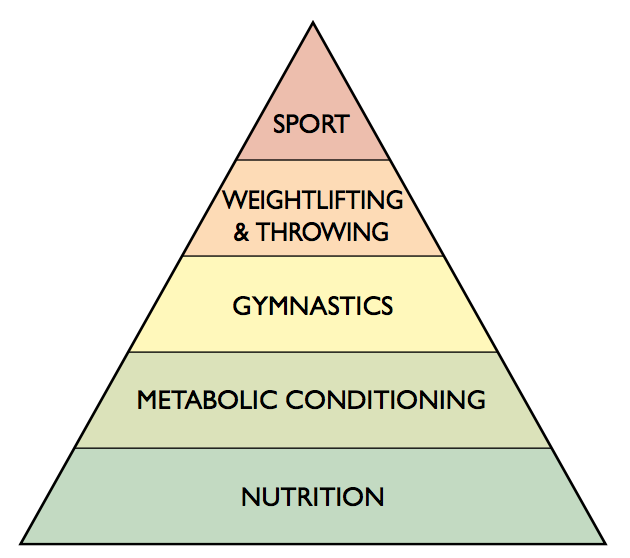
6.2 This past week I was honored to present a Power Pantry perspective to a group of business leaders in the Lancaster, PA, area. The task was simply to bring some valuable Power Pantry guidance that might help us all launch into a great 2019. I prepared fundamentals on food, movement, wise counsel and goal setting. I figure those are life skills that I hope to use through my old age, so why not share them with this group of leaders. My Power Pantry foundation has always been that we need real food in our pantries, so my fist encouragement to the group was to "Get Real" in their food choices. I also shared some direction from CrossFit and Spartan Race guidance. Interestingly, both of these wellness-related industries put a high value on our food choices. CrossFit has a training and certification series that gives the groundwork of their 'functional fitness' approach, and the base of that work is Nutrition. CrossFit direction on nutrition looks like this: Eat meat and vegetables Nuts and seeds Some fruit Little starch No sugar That's it. Fundamental, and real. No more faux food. Check out this great article that describes the CrossFit Level 1 training, and how some of these fundamentals fit together: Off the Carbs, Off the Couch Nutrition is the base of the CrossFit pyramid, and I agree. Real food is the foundation that allows us to overcome our Western lifestyle diseases, and have something to build on for true health and wellness. Start today by reading further on a whole food diet (past Power Pantry posts are a great resource), and purge some faux foods out of your pantry. You'll set the right tone for 2019 and give yourself a great wellness launch.
By the Way
Notice that CrossFit isn't against carbohydrates. There are plenty of carbohydrates in vegetables and fruits. The problem, metabolically, is refined starches (refined grains like wheat, and all the pastas, breads and snacks made from them.) A great diet includes plenty of lean protein, vegetables and fruits (and the carbohydrates that come with them), and naturally-derived fats. Let's work on getting more of those in our pantry and fridge.
5.16 If you've been reading Power Pantry for any amount of time, you know that all foods are not created equally. More than that, there are a lot foods which may be nutritious and satisfying for some people, and downright harmful to others. I have a very sensitive gut, and have learned over the years that some foods are just fine for me, yet others (think nightshade veggies, corn and legumes) are flirting with nutritional and physical disaster. This keeps me watching for healthful sources of carbs, fats and protein, and yields (hopefully beneficial) content for Power Pantry. One healthful protein I appreciate is the sunflower seed. I've mentioned sunflower seeds numerous times in Power Pantry, but know these nutritional powerhouses deserve a closer look. While so many proteins come with dietary or digestive challenges (dairy, beans, tree nuts, various fish, eggs, etc.) sunflower seeds offer numerous nutritional benefits with none of the common allergy issues. These power-packed seeds have been cultivated and enjoyed for thousands of years, and one thing consistently credited to sunflower seeds is that they are well tolerated by so many people. Along with that, sunflower seeds pack tremendous health benefits. Check out this article from the website for "The World's Healthiest Foods" (www.whfoods.com) Sunflower Seeds - a health-promoting snack Note the variety of benefits: a great source of Vitamin E (the body's only fat-soluble anti-oxidant, for anti-inflammatory help and cancer prevention ); phytosterols to lower cholesterol, magnesium to strengthen our nervous system, and selenium, a powerful detoxifier and cancer preventer. So if you're looking for something super healthful, snackable and satisfying, reach for sunflower seeds. You just may find a new favorite.
4.34 There are notable holiday foods that make memories, are healthy, and are worth sharing with others. One of my favorites is pomegranates. Available mainly between September and January (in North America), pomegranates make a wonderful, healthful addition to holiday meals. Pomegranates are an ancient fruit which has been cultivated since Biblical times, and originally hails from the Middle East and Mediterranean. There are numerous worthwhile benefits from the sweet and tart juice, along with the edible seeds. You'll find the whole fruit, and juices, available in your grocery store. When shopping for pomegranate juice, be sure to get the 100% juice, as other 'cocktail' juices contain numerous fruit juices (like pear and apple) and often have sugar as well. The incredible health benefits of pomegranates makes them a welcomed part of a wellness lifestyle. If apples, grapes and bananas have gotten a bit boring, try throwing in a pomegranate. I like this detailed article from Dr. Josh Axe, describing the top 7 benefits of pomegranates and their juice: Dr. Axe on pomegranates You'll note benefits like fighting cancer, lowering blood pressure, reducing join pain & arthritis, heart health and increasing testosterone. Quite a lot of benefits from one simple fruit. The fruit has a unique configuration of seeds within the heavy rind, with each seed surrounded by a juicy aril. The arils and seeds are all edible, and packed with goodness. Pomegranates are known for beneficial values of vitamin K, vitamin C, folate, potassium and more. They pack a lot of nutritional punch. So give pomegranates a try this holiday season. You may find a new favorite fruit for your power pantry, and your body will thank you for the health and wellness it offers.
By the Way
Cleaning a whole pomegranate isn't the easiest task. The juicy arils and seeds are encapsulated in the meaty rind of the fruit, and it takes a bit of patience and persistence to get it opened and cleaned. But the flavor and benefits are worth the effort. And be careful, because the juice will stain clothes and cutting boards, etc.
4.25 Mushrooms often get a bad rap. It is said that there are two opinions on mushrooms - you either love them or hate them. What many haters don't consider is how healthful mushrooms can be as part of your pantry. From significant antioxidants and cancer-inhibitors, to copper, calcium and selenium, mushroom varieties offer all kinds of nutrient-rich benefits. You get fiber and low carbs with mushrooms as well; great for controlling diabetes and contributing to heart health. There are lots of edible mushroom varieties, but the most beneficial are not as commonly know. Most popular are the white button mushrooms, portabello and crimini, but these aren't the most nutritious. Check out some of the mushroom varieties reviewed by Dr. Andrew Weil in this post: Dr Weil on mushroom varieties Even so, there are still distinct health benefits from mushrooms of all varieties. See this article from Dr. Josh Axe: Dr. Axe on mushroom health benefits Please note: it is always best to consume mushrooms which are cooked. Raw mushrooms are known to have carcinogens which are cooked off at high temperatures (like from broiling, grilling or sauteing). So be sure to cook your mushrooms before enjoying them as part of a nutrient-dense menu. Pick up some mushrooms today and enjoy the savory, meaty flavors and textures, and enjoy the health benefits which go with them.
By the Way
Almost half (47%) of all commercial mushrooms, worldwide, are grown in a small PA community in Chester County, just west of Philadelphia. Kennett Square is the small town that has the distinction of "mushroom capital of the world"... literally. See more information here.
4.21 I am training for a local half-marathon, and it's now 3 weeks away. My running hasn't kept up with what my schedule is telling me, but I'm close. I have been working out regularly, and keeping after good stretching and short to medium runs. So when I planned for a 6+ mile run yesterday, I thought everything was fine, and was looking forward to getting out early and enjoying a late summer run. I was doing great on the local roads and hills that I know so well, and then it happened.
I hit the wall. I don't remember having a run like the one I had yesterday. And instead of beating myself up or just giving up and going home, I decided to let it play out. I walked. I 'never' walk... but yesterday, at about 3 1/2 to 4 miles in, I decided to walk some and see what would happen. As it turned out, I did about 8 miles, with about 6 of it running and probably 2 of it walking. I was drained when I got back, but I felt like it was important to see it through, and I know I learned something. I realized that Spartan training has moved some of my muscle mass from my legs to my upper body, so I have leg-work to do to prepare for this half-marathon. And I learned that my body continues to change with the years, and our pantry still has a great influence on my physical health. Even though we focus on whole foods, and healthy, nutrient-dense choices, there are some foods in our pantry which are not the healthiest, and in some regards, I'm just missing nutrients. I did some great research yesterday and today, and am coming to terms with how my age is likely affecting my testosterone levels. Low T is very real for men over 40, and if you aren't keeping after vital nutrients and good food choices, you'll suffer unnecessarily. So I have some simple work to do in the coming weeks. I'm almost 50, and though I could have focused on my testosterone levels years ago, I'm glad I'm starting now. I have a new outlook on 'how' to regain some vibrant energy and stamina. And I have about 3 weeks to get my legs back in race mode.
4.13 Looking for an all-star grain to add to your pantry? There is a lesser-known cousin to quinoa which has great nutritional density and is affordable and growing in availability. It's amaranth, a very tiny pseudo-grain originally from Mexico and Yucatan Peninsula. Amaranth is not a seed or grain. It is a tiny grain-like structure from the flowers of the amaranth plant, but it functions much like a grain, and in some ways, even better. Amaranth is a protein powerhouse, and is high in manganese, iron, magnesium, calcium, phosphorus and potassium. Compared to rice an oats, amaranth is a tremendous source of fiber. About 10 times more fiber than white rice, and 20% more than oats.That makes it a great addition to any meal or recipe. Amaranth is great cooked like oatmeal, as a porridge, and can be seasoned and cooked like rice or quinoa for addition to a favorite spicy dish or salad. It can also be popped by tossing a tablespoon of amaranth in a dry, hot skillet. Once popped it is a great snack by itself or can be a topping on salads or soups, etc. So give Amaranth a try as a healthy, nutrient-dense alternative to the usual starchy side dishes. You'll benefit from the great nutrient value of amaranth and will likely enjoy the nutty, slightly malty flavor.
By the Way
Bob's Red Mill packages and distributes Amaranth. If your local market carries other Bob's Red Mill products, but you don't see amaranth, be sure to ask at customer service to see if they could stock amaranth as well.
4.11 I'm in end-game racing mode. I'm super excited about the half-marathon coming up in 6 days at Garden Spot Village. This is a phenomenal marathon with lots of fun, excellent recovery food (and milkshakes!) and a tremendous overall experience. It's also a Boston Marathon qualifier with lots of hills, so it's challenging. This week I'm in race mode for my meals. I'm after simple carbs and proteins (like brown rice and beans), light on dairy and grilled meat (maybe some fish), and some whole grains which will stick to my ribs. The goal is to build glycogen reserves which are ready and waiting for race day. Isn't it interesting that the best racing fuel is really simple and 'clean'? What our body is after is glycogen stores in our muscles, and those come from carbs consumed in the hours and days just before the exertion (race). Again, nothing with a lot of fat or fiber... what you want are carbs and easily digested proteins. The rule of thumb is that you can do an hour of high exertion without a snack or food break (just water). But if you're running 90 minutes plus, you should be getting food-fuel mid-run to meet the demands of the effort. By that point you'll have used up what was stored from recent meals. About 30g to 60g of carbs per hour, mid-run, is appropriate. As a guide, a large banana has about 30g of carbs, and it is low in fiber, so bananas are a great choice. Runner's World always shares excellent guidance on all-things-running. Check out these articles on how to eat for long runs. 16 Healthy and Yummy Prerun Meals and Snacks How to Fuel for a Half Marathon The Right Way to Carbo-load So the next time you have a long run or extensive workout planned, think about the fuel you've provided for the demands you're putting on your body. If you carb-load and fuel mid-workout, you won't run out (and 'hit the wall') and your body and finishing time will thank you.
By the Way
You want to be sure to have fluids with any mid-run snacks. If you can't digest it easily, your body won't use it, and you may even get nauseous. I'm not a sports drink guy... but those have calories and electrolytes and work well... and plain water is obviously fine.
3.34 We all have some level of ill-health which we would love to be relieved of... or are willing to tolerate. And that has been the truth of pursuing wellness for centuries, and probably millennia. And what if the underlying truth has always been that our bodies will heal naturally when given the right opportunity and nutritional circumstances to do so? It's interesting that concepts credited to Hippocrates thousands of years ago, are also closely held beliefs of other wise influencers in our American history. I remembered that Thomas Jefferson had strong opinions on the body's natural ability to heal, and in looking up his perspectives, came across the fact that Thomas Edison believed similarly, and doctors should guide the process. Jefferson was convinced that our physical makeup was too complex for broad-brush solutions, and what we needed were natural approaches which responded specifically to our needs and circumstances, to give the body the chance to heal. Edison said, "The doctor of the future will give no medicine but will interest his patients in the care of the human frame, in diet and in the cause and prevention of disease." Isn't it interesting that brilliant minds like Jefferson and Edison followed the simple logic that as complex as our bodies are, what we really need is guidance in diet, general care, and tools to understand and prevent disease. The fundamental truth: we will heal naturally when given the right circumstances. Don't get me wrong, there's a place for modern medical solutions. We have eradicated innumerable diseases, ailments and trends of poor health because of brilliant minds in our modern era. And humanity can confidently grow into a future of longevity and thriving because of so many beneficial medical advances. Any yet, medical wisdom is sometimes not so wise, and it needs to be balanced with a discernment of good nutrition and cause-and-effect review of disease and ill health. So as we approach a new year, maybe it's a great time to open our perspective to the relationship between nutrition and lifestyle choices, and the health condition we find ourselves in. The more I study and benefit from good nutrition and wellness choices, the more I realize how simple it is to gain energized, clear-thinking, well-rested health... it may not be easy, but it is very simple.
By the Way
Check out these resources for further perspectives from Jefferson and Edision, on simple wellness and natural healing:
Jefferson's convictions on Medicine as presented by the Thomas Jefferson Foundation here.
Edison's quote on health, as routed out by Snopes, proving its validity here.
3.17 Since I started living a wellness lifestyle about 6 years ago, I've been surprised by what is possible physically, mentally and emotionally, when we feed our bodies with nutrient-rich foods. This weekend turned out to be a gardening and lawn weekend. I cut two different lawns, did the weeding of flower beds, planted a bunch of flowers and put in a boatload of mulch at both. My Fitbit told me that I had over 260 'active minutes' yesterday, and another 180+ today. (An active minute is measured as a certain level of physical exertion, and starts counting after you've been active for at least 10 minutes) So that's over 440 active minutes between yesterday and today... whew, no wonder I'm beat. But years ago, I wouldn't have just felt the expected tiredness or stiffness of hours of gardening, I would have been debilitated. I remember episodes of a day of shoveling snow or mulching, when I still ate a standard American diet, and I was a mess afterward, sometimes for days. Now, with a pantry of great, nutrient-dense foods I can recover simply with some healthy calories and a good nights' sleep. And that's what I did this weekend. I went hard at it yesterday with yard work at one property, and did ours today. And I'm ready to find something to do tomorrow as well. There are many benefits to keeping a power pantry. Sometimes it's just getting a lot of yard work done on a holiday weekend, and feeling great afterward. No matter what, our bodies will thank us for pursuing nutritious foods and cutting out the junk.
By the Way
One other thing my Fitbit told me is that I burned over 4500 calories yesterday and over 3000 today (the physical activity tracking, combined with the the heart-rate data, gives a good estimate of calories burned.) So breaks included snacks of walnuts and apples, and a great dinner last night of salmon, steamed veggies and rice. Lots of good, tasty calories. Mmmmm...
3.16 Until about six years ago our family ate a standard american diet. Corn and wheat products, artificial colors and sweeteners, flavor enhancers, sugar and salt were all normal. We weren't especially unhealthy compared to American expectations, but the truth is, my health was a mess, and Jen's was headed for a train wreck. We've committed recent years to peeling back layers of nutritional revelation, and we're now significantly healthy...maybe even exceptionally healthy. It hasn't been an easy journey, and what we needed along the way were beneficial co-conspirators, especially in the form of great nutrient-dense food providers. One of these I am thankful for is Mary Waldner, founder of Mary's Gone Crackers. She has a great story , and I really resonate with her journey. She turned away from standard american foods toward ancient, gluten-free grains, seeds and vegan recipes, and grew her home-made cracker business into a thriving enterprise. Now we all can benefit from the crackers, pretzels, cookies and treats Mary and her bakers create. I love that Mary has gone to great strides to not only be gluten-free, non-GMO, and vegan, but they use low-glycemic sweeteners like palm sugar, and support local farmers and fair wages. Her crackers and snacks taste great, they're unique, and they are good, nutritional foods. You won't find saltines and Ritz crackers in our pantry anymore, but you definitely find sweet potato chips, rice cakes and Mary's crackers among our snacks. Those are small changes, but they have proven to be much better choices for our health. How about you? Have you purged some poor choices from your pantry lately? Today is a good day to do just that. Your life and health are worth it.
By the Way
Mary's crackers and snacks are distributed nation-wide through a network of distributors, and if you can't find them, either ask the store manager to get some on the shelves, or order online.
2.85 Admit it... this year you want the holidays to be different (where your health is concerned). If you're like me, you have countless memories of holiday seasons of indulgence and overindulgence that you paid for dearly, months into the new year. I know it's possible for this year to be different, and we can do it without starving ourselves or even 'dieting'. Sounds impossible? No, it's not, really. All we need is a plan, some conviction, and a pantry stocked with healthy, nutrient-dense options. This week Dr. Joel Fuhrman posted a great guide to holiday eating in an email blast, and I want to share it here: Celebrate the Holidays Healthfully This article offers great content for how to get our eating habits on a healthful track, and yet not go hungry in the process. Things we've talked about in the Power Pantry blog before: pursue greens, beans, onions, mushrooms, berries and seeds; have a health-buddy for accountability; take healthful dishes with you to family gatherings, etc. Make this holiday season different in a healthy way. Start by stocking your pantry (and fridge) with healthful, nutrient-dense options that your body will love, and set a course for a healthy, happy holiday and new year.
By the Way
Don't miss the comment from Dr. Fuhrman on 'holiday heart' - the time at the ER when doctors see the most strokes and heart attacks from holiday indulgences.
2.64 It's 5 days until my 2nd half marathon... that means it's go time, baby. I started training last month with some shorter and longer runs and built up to the 10+ mile run I did last weekend. Then this past week I really fell off the wagon where my nutrition was concerned (cake?? I actually had cake... with buttercream icing...) I noticed a few irritating (and preventable) consequences; if I had just gone without, none of them would have happened. One telltale from my poor eating was a strange sluggishness Friday night, a total demotivation. I remember that feeling from years ago before my body was detoxed and tuned up; I was surprised how pronounced it was going into the weekend. Problem was, I planned to go out for a medium distance run on Saturday morning. I needed to get my head in the game. What all of this affirmed is that keeping our bodies tuned up makes a difference. Now, since eating clean this weekend, I feel great again. And I was able to plow through a six mile run yesterday and just over three today. Add yard work and playing with the kids to that, and I'd say it's been a great weekend, despite the poor eating last week. I'm very convicted of the need to shed extra baggage, especially going into something like a half marathon. I don't want to take last weeks' poor food with me, or any unnecessary pounds, just like I wouldn't run a race with a bunch of books in a bag over my shoulder in case I got bored. I couldn't afford to put up with the weight, and I can certainly do without a book to read while I'm engaged in a race. So this week I'll be focused on the essentials: what do I really need for next Saturday in order to be prepared? If I don't need it, I'm ditching it, and that goes for nutritional choices, mental perspectives, and my clothing and accessories for the race. Do you have extra baggage that you're carrying? Would you be better off without it? If you're not sure, have you tried to reduce and then get rid of the baggage to see what the result feels like? There's no time like the present.
By the Way
It takes about 24 to 72 hours for our bodies to naturally digest and metabolize food. Toxins are filtered by our liver and kidneys and gotten rid of with a day or two, and possibly up to about a week is needed to get rid of everything our bodies would identify as foreign.
2.55 It's the peak of summer, and the ideal time to enjoy the quintessential summer fruit: watermelon! The growing seasons of various states in the US give good overlap of watermelon availability, so you should be finding, fresh, sweet, juicy watermelon at your local market from July through September (and parts of California and Texas have their growing peaks in May and June). Check out these fun facts on watermelon from the Watermelon Board (yes, there is one of those - see www.watermelon.org):
The first recorded watermelon harvest occurred nearly 5,000 years ago in Egypt.
Watermelon is 92% water.
Watermelon's official name is Citrullus Lanatus of the botanical family Curcurbitaceae. It is cousins to cucumbers, pumpkins and squash.
By weight, watermelon is the most-consumed melon in the U.S., followed by cantaloupe and honeydew.
Early explorers used watermelons as canteens.
The first cookbook published in the U.S. in 1776 contained a recipe for watermelon rind pickles.
Updated! According to Guinness World Records, the world's heaviest watermelon was grown by Lloyd Bright of Arkadelphia, Arkansas in 2005, weighing in at 268.8 lbs (121.93 kg). Lloyd grew and weighed in for the Annual Hope, Arkansas Big Watermelon Contest on September 3, 2005.
The United States currently ranks 5th in worldwide production of watermelon. Many states grow watermelons with Florida, Texas, California, Georgia and Arizona consistently leading the country in production.
The great thing about our global, integrated economy is that you can easily get fresh watermelon year long, from places like Brazil, Costa Rico, and the Dominican Republic covering the winter months. So, if you haven't yet indulged in this staple of summer fare, grab a watermelon this week and enjoy.
By the Way
If you want some convincing that watermelon is a worthwhile addition to a power pantry nutritionally, check out these articles on the various health benefits of watermelon: Dr. Joel Furhman on 3 Benefits of watermelon (from a recent email blast) Dr. Joseph Mercola on 6 Things You Didn't Know About Watermelon
2.43 I've written before that I'm a big fan of Dr. Joel Fuhrman. He consistently adds value to the conversation on health, wellness and nutrition, and best of all, his guidance works, if we'll just do it. At some point, when we're not satisfied with our health and the direction we're getting from conventional medical sources, we need to consider other resources. For me, Dr. Fuhrman is one of those resources. A fundamental perspective that Dr. Fuhrman brings to nutritional excellence is that salad should be the main dish for as many meals as possible. The value our bodies derive from fresh veggies and the nutritional density of greens, and all colorful vegetables for that matter, are unmatched by anything in the standard American diet. It's as simple as that, "make salad the main dish"! Obviously summer is the best time to launch into this perspective, as we're surrounded by every kind of fresh produce for about the next 4 months. Of course our hyper-connected world yields fresh fruits and veggies year-round, whether from the farm field a mile away, or California, Florida, New Zealand or Argentina (all of which have been sources for the Muller's produce recently). So take a look at your meal-planning for the next few weeks and incorporate salad wherever you can. Part of the preparation will be stocking your power pantry and fridge to compliment the salad initiative, so start there. And be careful about the dressings! That is the biggest tripping hazard in a healthful salad. Most bottled, brand name dressings are off the charts with fats (and not good fats), sodium, flavor-enhancers and sugars - uhg! Around our house we keep it simple with some Newman's Own selections, mix-yourself Italian dressing, and plain old oil and vinegar. Simple always wins. Here's to being big on salads and amping up our salad consumption. Good luck!
By the Way
Dr. Furhman recently did an email blast about making salad the main dish. Check it out here: Make the Salad the Main Dish He even addresses the dressing issue with some (shameless) promotion of his own line of healthy dressing choices...
2.42 Have you heard of the 431 Project? I hadn't either until a few months ago. It is one of those passionate movements unfolding before our eyes, and for me, I really want to see them succeed. The 431 Project was started by Spartan Races Founder and CEO Joe DeSena, with the goal of impacting today's kids, teens and young adults toward healthy living. To do this we have to get them off the couch, engaged in regular physical activity, and eating healthy, nutritious foods. That's a tall order given that obesity among children is about 17%, and has been for over 10 years. But the organizers of the 431 Project are up to the challenge, after all, they have the grit of the Spartan Races behind their efforts. If you're familiar with the Spartan Races (see my post from last year) you know that they eat challenges for a snack between morning muesli and a 15 mile run through the mud... Check out what the 431 Project is doing here: www.The431Project.com, and think about a student or young adult you may be able to influence toward healthy living. Is there a niece or nephew, or a neighbor, or maybe one of your own children, who needs to move toward healthier lifestyle choices? The very best time to begin making healthy choices is today, and if we can help even one person move toward those good wellness choices, then all of our effort is worthwhile.
By the Way
There are numerous ways to bring the 431 Project to your community, for the benefit of youth and young adults. Check out this document available from the 431 Project website, and see if one of the activities may fit in your community: Healthy Initiatives.
2.41 Sometimes adversity yields a great idea. That's what happened in 2011 when Pastor Rick Warren, of Saddleback Church, realized he and his congregation were way overweight. The resulting great idea is The Daniel Plan. If you haven't heard of this extremely valuable lifestyle plan, check out www.danielplan.com. At its foundation is the biblical story of Daniel, and how he negotiated with his captors to not follow the ways of the Persians, particularly where food and drink were concerned. Rick Warren's conviction that he and his congregation needed to reduce their size led him to gather an expert panel of doctors. The three were Dr. Daniel Amen, Dr. Mark Hyman, and Dr. Mehmet Oz - this is a significantly powerful team when it comes to lifestyle wellness guidance. Not only are they nationally recognized, but they bring a wealth of nutritional wisdom to their work. Five essentials make up the backbone of The Daniel Plan: Faith, Food, Fitness, Focus and Friends. The two main drivers of the plan, though (the secret sauce) are Faith and Friends. To learn more, check out the Start page from their website - Daniel Plan Start page. The guidance available through The Daniel Plan is invaluable - there is no telling how much you will benefit from this kind of help unless to engage it. Check out the web site, or the book Warren wrote: The Daniel Plan: 40 Days to a Healthier Life. If you need a wellness lifestyle boost, and direction to get and keep you on track, maybe you'll benefit from The Daniel Plan.
By the Way
In the first year alone, over 15,000 participants in the plan, from Saddleback Church, lost a total of 250,000 pounds. That is tremendous impact from a simple plan.
2.33 I like Tony Horton, creator of P90X and P90 workouts, and host of a really cool YouTube Channel. See my previous post on Tony here - I appreciate what he does because it is simple, reproducible and stands as a lifestyle wellness resource. Not only does Tony offer valuable workout guidance to bring health and longevity to our daily routine, he's a kindred spirit when it comes to healthy eating. Below are a couple videos from the Tony Horton YouTube Channel. The first one is about eating more and losing weight. You may say, is that possible? The answer is a resounding yes (in my own experience, I eat a lot of great food and snacks, every day, and maintain at my target weight just under 160 pounds, and I'm 6'+ tall...):
The second video gives six fundamentals for healthy eating. Again, these are spot-on, focused on eating real, nutrient dense, fiber-rich foods, and staying hydrated:
And a great encouragement is at the end of the second video, to pass on the content. Tony likes to say, "it's your turn," meaning he wants us to engage... take a next step in our own journey, and then pay it forward by passing along wellness guidance we are living out. Maybe there are a few simple wellness things you've made a part of life, like adding ancient grains or reducing or eliminating gluten and dairy. Maybe you're walking regularly or bought an activity tracker to keep an eye on your daily and weekly activity. If you've done these kinds of things and benefited from it, then it's your turn... time to hand good guidance off to someone important to you and encourage them in their journey. A neighbor, co-worker, relative... shoot them this blog post or send them to a YouTube channel like Tony's. You'll feel good about being a resource, and it just may change someone's health and life.
By the Way
I like that Tony is a 90/10 or 80/20 eater (click here for a previous post on this idea). What I mean by that is he gets a strong majority of calories from healthy, nutrient-dense foods (the 80%-90%) and limits unhealthy and 'comfort' foods (keeping these at 10% - 20%). This allows an occasional treat, and the empty calories and fleeting 'pleasure' that goes with it, but reaffirms the guiding commitment to healthful choices.
2.31 I met with a good business friend the other day, and our conversation drifted to wellness and healthful eating. This isn't unusual for our meetings... we can talk for hours and it seems like minutes. And interestingly, this friend is the one who turned me on to Dr. Joel Fuhrman almost three years ago. His story is somewhat like mine and my wife's... it was my friend's mother who, while suffering from rheumatoid arthritis, sought out any and all solutions, especially ones which didn't involve medications. Her journey led her to Dr. Fuhrman, and she actually was a patient of his for a number of years. This turned her into a fan of nutrient-dense whole foods, and she became a proponent of this kind of healthy eating and living to others (including her son, my friend). The good news of her journey (like ours) is that she has been free of the pain, swelling and torment of arthritis for years, just by healthful eating and living. It is so interesting to me how useful, valuable information takes on its own life. In 2012, my wife Jen and I were on our own wellness journey when I was given Dr. Fuhrman's book, Eat to Live, by this business friend. Instantly, I was hooked. The simple, sustainable, healthful choices laid out in Fuhrman's materials resonated with me, and has literally changed our lives. Now, I can't think of 'going back' to our old food and lack-of-wellness lifestyle. We have overcome so much joint pain, back pain, headaches and migraines, lethargy...even common colds, sore throats and ear aches that we don't get any more... why would we ever go back? The gift I was given by my friend in June of 2012 (in the form of Fuhrman's book) is the same gift you can give someone. If you have benefited from progress you have made on your wellness journey, share that benefit by passing it along today. Have a great conversation over coffee, or on a long walk, or just around your home or office. Empathize with where they are, and give them some hope that there is a way forward, separate from the pain and illness. As you've been intentional about your wellness journey, make it a point to help someone else be intentional about theirs.
By the Way
There are invaluable resources for your wellness journey on Dr. Fuhrman's website: Dr. Fuhrman online You can sign up for regular nutritarian guidance in his emails, and understand his guidance better:
"You can reverse disease, reduce high blood pressure, lose unwanted weight, lower your cholesterol levels, prevent heart disease and cancer, and improve your health — all without relying on drugs and fad diets."
As you're on your own journey, be sure to pay it forward by doing life with others on their journey. Fuhrman's materials might be helpful.
2.30 Most western culture is really confused about wellness and healthy eating. For all the perspectives on one side of an issue, there are just as many on the opposite. What I think the back-and-forth debating misses, though, is the vital question of 'what do our bodies want?' Instead of what our bodies want, we get stuck on what our minds want. Without ever thinking about it, we feed ourselves with what our minds say is wonderful and desirable. The problem is, what our minds choose, and what our bodies would choose, if they could, are vastly different. Our minds are programmed to prepare, prepare, prepare. Get ready for ________ (a shortage, a drought, a famine) by packing on stores of fat. And when our minds are playing that message over and over and over (loudly!) our bodies are happy to oblige by filling up on easy calories, often empty calories. The three most dangerous catalysts for ill health (that would answer our minds' call to pack on weight) are fatty foods, sweet foods and salty foods. Something like a fast-food milkshake wields all three and our minds cry out, "YES!" when we drink it, even though our bodies will cry out, "what have you done?!" mere minutes or hours later. We really need to listen to what our bodies want, instead of what our minds want. These desires are simple and much more healthful, but these aren't what our minds would cry out for. What our bodies want are whole foods which are nutrient dense and fiber rich. When combined with ample amounts of fresh, filtered water, you have a recipe for a thriving metabolism and healthful life. How do we get to the point of desiring what our bodies want, instead of what our minds insist is desirable? The short answer is 'retraining'. We need to get our bodies so healthy and vibrant from eating the healthful foods, that our minds final come around to admitting that kale wins over dinner rolls, and fresh fruit wins over ice cream. Eventually our minds will develop a firmly grounded context for making healthy choices because, stored fat or not, the healthful choice has brought us pain-free health and longevity, exactly what our minds ultimately desire. So start your retraining now, today. Consume nutrient-dense, fiber-rich whole foods, and enjoy copious amounts of filtered water. Leave behind a modern diet of processed, refined grains and sugars, and fatty and salty foods as well. Your body will thank you for it in no time, and you'll be on your way to health by giving your body what it wants. By the Way I've posted a lot in the past with guidance from Dr. Joel Fuhrman that leads directly to healthier choices of nutrient-dense foods. Check out those posts here: Power Pantry posts regarding Dr. Fuhrman And for some content on detoxing from a standard American diet to a more healthful plant-based diet, check previous posts here: Power Pantry post on detoxing